By late fall, most Vermont homeowners aren't thinking about spending much time in the backyard. Patio furniture is being put away, gardens have slowed down, and the landscape is preparing for winter.
But this is actually one of the best times to think about what you want your property to look and feel like next year.
After a full spring, summer, and fall outdoors, you probably have a much better sense of what works well and what doesn't. Maybe the patio felt too small when people came over. Perhaps one part of the yard stayed wet after every rain. You might have noticed a lack of privacy, awkward walkways, an unused slope, or a section of the property that never really found a purpose.
Those observations are useful.
Planning now gives you time to turn them into a more thoughtful landscape plan instead of waiting until the first warm weekend of spring to decide what needs to change.
Start With What Didn't Work This Year
Before thinking about new features, look at the problems you already experienced.
Think back over the past several months.
Were there areas of the yard you avoided because they were muddy? Did guests have trouble moving between the house and patio? Was there enough room for outdoor dining? Did neighboring properties feel more visible than you expected? Did certain planting beds feel empty or difficult to maintain?
Sometimes the most valuable landscape ideas come from everyday frustrations rather than inspiration photos.
A patio might not need to be replaced entirely; it may simply need more usable space around one edge. A backyard may not need more landscaping everywhere; it may only need better screening in one specific location.
Taking a fall landscape assessment can help turn those observations into a clearer list of priorities before spring.
Decide How You Want to Use the Backyard
A better backyard starts with knowing what you actually want to do there.
That sounds simple, but it's easy to skip this step and jump directly into choosing materials or features.
Do you want more space for outdoor dining? A comfortable place to sit around a fire? A quieter area away from the house? Room for kids to play? Better access to the garden? More privacy?
The answers help determine how the landscape should be organized.
A family that regularly hosts large gatherings may need a very different patio layout from homeowners who primarily want a quiet sitting area for two. Someone who enjoys gardening may want more planting beds, while another homeowner may prioritize lower-maintenance landscaping and more hardscape.
The goal isn't to fit every possible feature into the property. It's to make sure the spaces you create support the way you actually live.
Look at the Patio With Fresh Eyes
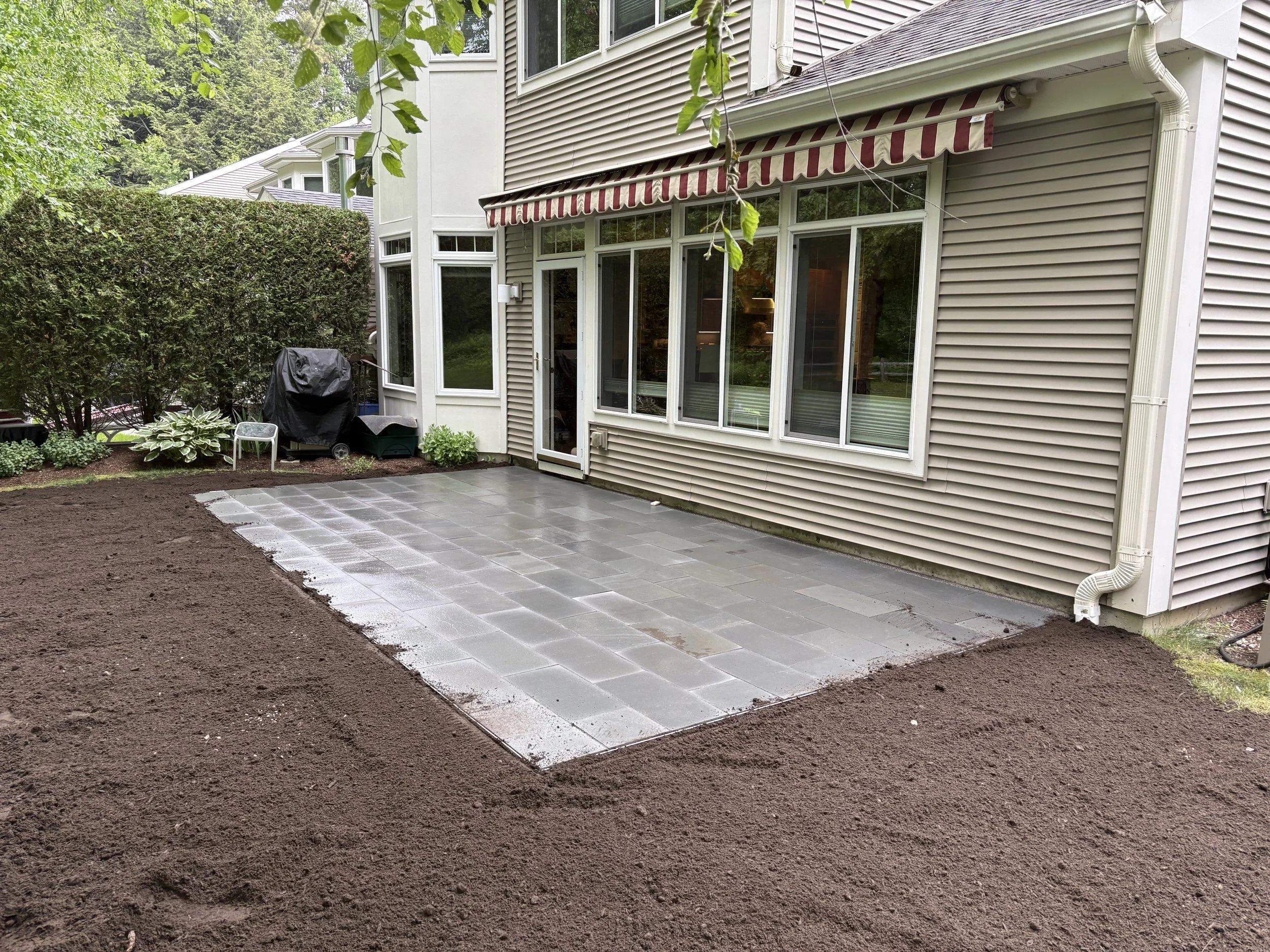
Patios are often the center of outdoor living, but that doesn't mean the existing layout is working as well as it could.
Think about how the patio felt during the busiest part of the summer.
Was there enough room for furniture? Could people walk comfortably around the table? Did the grill end up blocking circulation? Was there enough room when guests were over?
Also consider its relationship to the house.
The best patio layout isn't simply the largest surface that will fit. It should connect naturally to doors, walkways, lawn areas, planting beds, and other parts of the backyard.
If you're considering an update, it may help to review how a patio can be designed to work with both the home and surrounding landscape.
Even a small change in size, orientation, or layout can sometimes make a patio feel much more functional.
Think About Where People Move
Walkways and circulation are easy to overlook until they're inconvenient.
Pay attention to the routes people naturally take through the property.
Do you regularly cut across the lawn between the driveway and backyard? Is there a comfortable path from the patio to another gathering space? Are steps located where people actually need them?
Those patterns can help identify where new walkways or connections might improve the landscape.
A good path should feel logical. It shouldn't require people to make an unnecessary detour or squeeze around furniture, planting beds, or other obstacles.
Clear circulation also helps the entire backyard feel more connected, especially when there are several outdoor areas.
Identify Drainage Problems Before Spring
Drainage is one of the most important things to evaluate before winter fully sets in.
Think about what happened during heavy rain this year.
Did water collect near the house? Did the lawn stay saturated in certain areas? Was there runoff across a walkway or patio? Did water move down a slope and cause erosion?
These issues often become even more noticeable during snowmelt and spring rains.
If you're planning a new patio, walkway, retaining wall, or other hardscape project, drainage should be addressed before construction rather than afterward.
A new landscape feature changes how water moves through the property. Proper grading and drainage can help prevent one improvement from creating another problem elsewhere.
On sloped properties, retaining walls can help improve drainage and create more usable space when they're incorporated into the larger design.
Look at Slopes and Areas That Are Difficult to Use
Not every part of a backyard is naturally easy to work with.
Slopes can make mowing difficult, limit furniture placement, create drainage problems, or leave sections of the property underused.
That doesn't necessarily mean the slope needs to disappear.
Sometimes grade changes can become an opportunity.
Retaining walls, terraces, steps, planting areas, or a carefully positioned patio may turn a difficult section of the yard into something much more useful.
The key is considering elevation early.
If grading changes are likely to be part of the project, they can affect everything from drainage to walkway placement and hardscape design.
Think About Privacy Before Leaves Return
Late fall makes privacy problems especially easy to see.
During summer, trees and shrubs may block neighboring views almost completely. Once the leaves fall, the backyard can suddenly feel much more exposed.
Walk around the property and pay attention to important sightlines.
Can neighboring windows see directly onto the patio? Is a nearby driveway visible from the main seating area? Does a road feel more noticeable once foliage is gone?
If privacy matters, this is a useful time to identify exactly what needs to be screened.
The answer isn't always a row of tall plants along the entire property line. Sometimes a smaller group of strategically placed evergreens, a screen near the patio, or a combination of planting and hardscape features can solve the problem more effectively.
Pinnacle's guide to landscape design for privacy explores how planting, structures, elevation, and layout can work together to create a more secluded outdoor space.

Consider Whether the Backyard Needs More Than One Gathering Area
A single patio doesn't always have to serve every purpose.
Larger backyards may work better when they contain several connected spaces.
The main patio might be used for dining and grilling, while a separate fire pit area provides a quieter place to gather. Another part of the yard could become a garden, play space, or smaller seating area.
Creating separate zones can make the backyard feel more interesting while giving each area a clearer purpose.
The spaces don't need to feel isolated from one another. Walkways, planting beds, walls, or changes in elevation can create subtle separation while still making the backyard feel cohesive.
This approach can be especially helpful when designing outdoor living spaces that remain useful beyond summer.
Look at What the Backyard Needs in Every Season
A landscape often looks very different in November than it does in July.
That makes late fall a good time to evaluate year-round structure.
Once most flowers and leaves are gone, what remains?
Evergreens, tree trunks, ornamental grasses, patios, walkways, walls, fences, and other permanent features become much more noticeable.
If the landscape suddenly feels empty, it may benefit from more year-round structure.
That doesn't mean filling the property with evergreens. A mix of permanent hardscape, trees, shrubs, grasses, and seasonal plantings can provide interest throughout the year.
Thinking about four-season landscape design can help create a property that feels intentional even outside the peak growing season.
Decide Whether Existing Hardscaping Should Stay
If you're planning a larger backyard improvement, take a realistic look at existing patios, walkways, walls, and steps.
Some features may still work perfectly well and can be incorporated into the new design.
Others may be limiting what the property can become.
An undersized patio, narrow walkway, deteriorating wall, or poorly positioned set of steps may need to be modified or replaced.
The decision shouldn't be based only on age.
Ask whether the existing feature works with the layout you want for the future. If it does, it may make sense to keep it. If it creates awkward connections or limits the design, addressing it now may lead to a better overall result.
When adding new work around existing features, careful planning can help blend new hardscaping with the home and landscape rather than making the project feel pieced together.
Think About Materials Before Construction Season
You don't need to choose every detail now, but winter can be a useful time to start thinking about materials.
Patios, walkways, steps, and retaining walls can have a major influence on the look of a property.
Pay attention to the architecture of the house, existing stonework, siding colors, roof, and other materials already present.
A new hardscape doesn't need to match the house exactly. It should simply feel like it belongs there.
Vermont conditions also matter. Materials and installation methods should account for snow, moisture, freeze-thaw cycles, and seasonal temperature changes.
If hardscaping is likely to be part of the project, it can be helpful to review how to choose materials that work well in Vermont's climate before making final selections.
Plan for Planting, Not Just Hardscape
It's easy for homeowners to spend most of their planning time on the patio or wall and treat planting as something to figure out later.
But planting is often what makes the finished landscape feel complete.
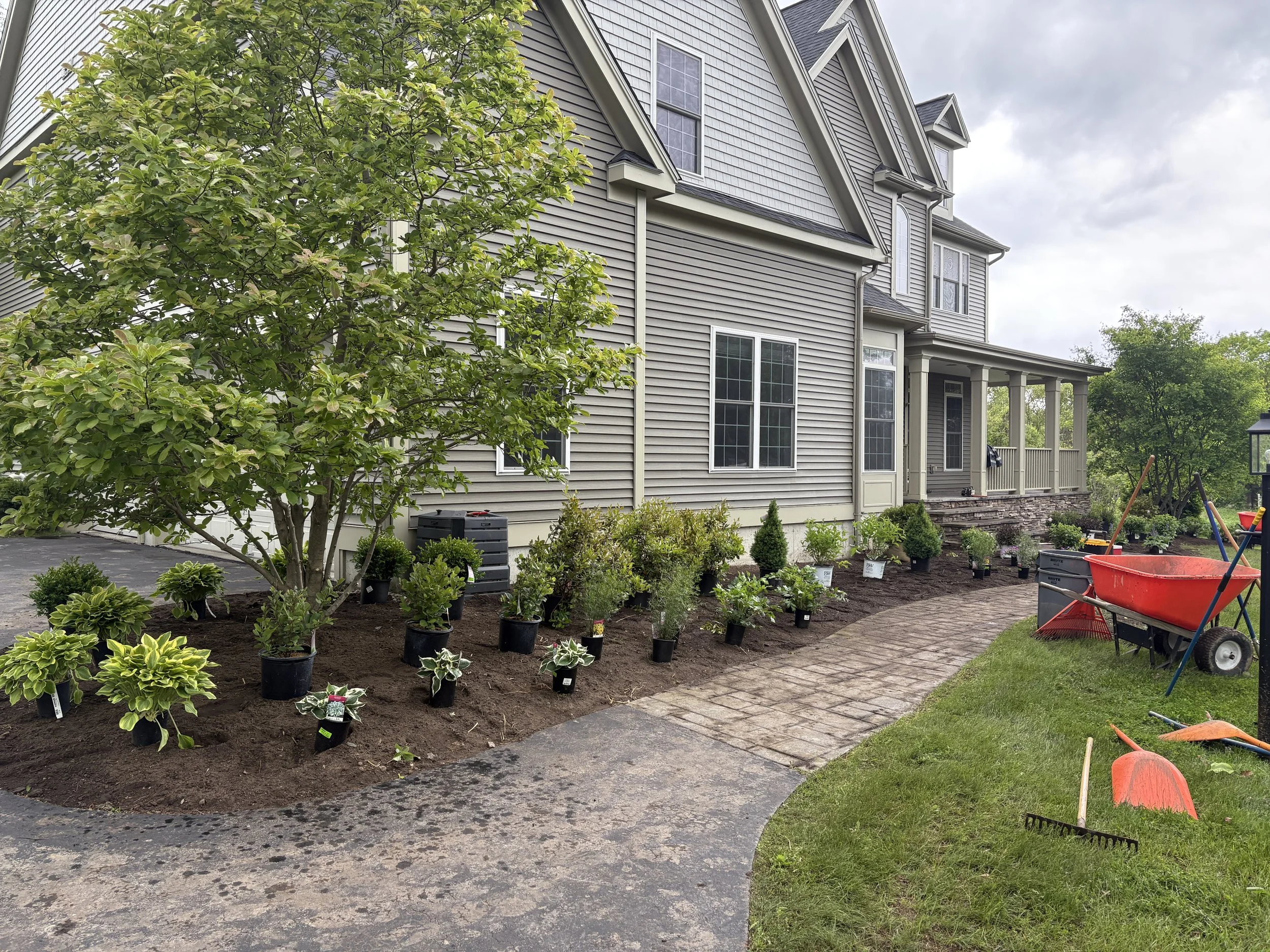
Trees, shrubs, grasses, and perennial beds can soften hardscape, create privacy, provide shade, frame views, and help transition from built areas into the rest of the yard.
Think about what role you want plants to play.
Do you need more privacy? Seasonal color? A stronger connection between the patio and lawn? Less mowing? Better definition around the house?
Planning these elements at the same time as the hardscape generally leads to a more cohesive result.
Think About Maintenance Before Adding More
A better backyard doesn't necessarily mean a more complicated one.
Before adding new planting beds, lawn areas, or landscape features, consider how much time you want to spend maintaining them.
Some homeowners enjoy gardening and want a property that changes frequently throughout the season.
Others want attractive landscaping that requires a more manageable level of maintenance.
Both approaches can work.
The important thing is designing around realistic expectations.
Plant choice, bed size, lawn area, irrigation needs, pruning, seasonal cleanup, and hardscape materials can all influence long-term maintenance.
A beautiful landscape that becomes difficult to care for may not feel like an improvement after a few years.
Consider Whether the Project Should Be Phased
Not every backyard transformation needs to happen in a single season.
If the long-term plan includes a patio, retaining walls, walkways, planting, a fire pit, privacy screening, and other features, completing everything at once may not be practical.
That's fine.
What matters is having the overall plan before the first phase begins.
The order of work can make a big difference. Drainage, grading, excavation, walls, and major hardscape areas often need to be considered before smaller finishing elements.
A backyard master plan can help phase a landscape project over time while keeping each stage connected to the same long-term vision.
That can reduce the chances of having to undo earlier work when the next phase begins.
Use Winter to Refine the Design
Once snow arrives, it may feel like landscape planning needs to stop.
It doesn't.
If you've already evaluated the property and identified the main goals, winter can be productive planning time.
You can review design ideas, think through priorities, consider materials, develop the project scope, and make decisions without feeling pressure to begin construction immediately.
This also gives you time to separate what you truly need from what simply sounds appealing.
A clearer plan going into spring can make the entire project feel more organized.
Don't Wait Until the First Warm Weekend
Spring tends to trigger landscape ideas.
As soon as the snow melts and people begin spending time outside again, projects that felt distant in November suddenly feel urgent.
That's why planning ahead can be helpful.
A major landscape installation usually involves more than selecting a contractor and choosing a date. There may be site evaluation, design work, material decisions, estimating, grading considerations, and other details that need to be resolved first.
Beginning those conversations during the off-season allows more time for thoughtful decisions.
If spring construction is the goal, starting with professional landscape design before the season is underway can help ensure the project is based on the property as a whole rather than one isolated improvement.
Make a Simple Priority List
You don't need a completed design before talking with a landscape professional.
A simple priority list is enough to get started.
It may look something like this:
Create more room for outdoor dining
Improve drainage near the patio
Add privacy from the neighboring property
Connect the driveway and backyard with a walkway
Reduce mowing on the slope
Add a second gathering area
Improve planting around the patio
Then separate those ideas into needs and wants.
Drainage may be essential. A larger patio may be a high priority. A fire pit might be something you'd like if the overall budget and layout allow for it.
That kind of list can make early design conversations much more productive.
Frequently Asked Questions About Planning a Backyard Project
When should I start planning a landscape project for next spring?
Late fall and winter can be good times to begin. Starting early gives you more time to evaluate the property, develop the design, consider materials, define the project scope, and prepare for the next construction season.
What should I look at before redesigning my backyard?
Pay attention to drainage, patio size, walkways, slopes, privacy, underused areas, existing hardscaping, planting, maintenance needs, and how you actually use the property.
Do I need to know exactly what I want before contacting a landscape designer?
No. Knowing what isn't working and what you'd like the property to do better is often enough to begin. The design process can help determine the right features and layout.
Can a backyard project be completed in phases?
Yes. Many larger landscape projects can be phased over several seasons. Developing the overall plan first helps ensure that each phase supports future work.
Should drainage be addressed before adding a patio or walkway?
Drainage and grading should be considered during the design stage. New hardscaping can change how water moves across a property, so existing drainage conditions should be understood before construction.
Can existing patios and walkways be incorporated into a new landscape design?
Often, yes. Existing hardscape can sometimes be reused or connected to new work if it remains functional and fits the long-term layout of the property.
Turn This Year's Experience Into Next Year's Backyard
You don't need to start construction now to make progress on next year's landscape.
Late fall gives you something spring doesn't: a full season of experience to learn from.
You know where people naturally gathered. You know where water collected. You know which spaces felt comfortable and which areas went unused. You know where privacy was lacking and whether the patio actually had enough room.
Those observations can become the starting point for a better design.
For homeowners in Chittenden County considering a patio, walkway, retaining wall, planting plan, drainage improvement, or larger backyard transformation, Pinnacle Properties can help turn those ideas into a cohesive plan.
Learn more about Pinnacle Properties' landscaping services or explore the Pinnacle Properties design process to see how a landscape project can move from early ideas to installation.