Outdoor Living Beyond Summer: Designing a Backyard for Vermont’s Cooler Months
In Vermont, summer gets much of the attention when homeowners think about outdoor living. Patios fill up with furniture, gardens reach their peak, and long evenings make it easy to spend more time outside.
But a well-designed backyard doesn't have to become unused as soon as temperatures begin to drop.
Spring and fall offer some of the most enjoyable outdoor weather of the year, especially when a landscape has been designed with cooler conditions in mind. The right combination of patio placement, hardscaping, fire features, wind protection, lighting, planting, and circulation can make an outdoor space feel comfortable well beyond July and August.
For homeowners considering a new patio or larger backyard project, designing for more than one season can make the finished landscape much more useful.
Start With Where the Outdoor Space Is Located
The location of a patio or gathering area has a major influence on how comfortable it feels during cooler weather.
In summer, a shady location may be ideal. By October, however, that same area can feel noticeably colder than a patio that receives afternoon sun.
Sun exposure changes throughout the year, so it's worth looking beyond how the property feels at the height of summer. An outdoor living area that receives some warmth from the sun during spring and fall may stay comfortable longer into the day and later into the season.
The house itself can also affect conditions. Depending on the property, placing an outdoor space near the home may provide some shelter from wind while making it easier to move between indoor and outdoor areas.
This is one reason designing a patio that works with your home and landscape involves more than simply choosing an open area in the backyard. Orientation, views, access, sunlight, drainage, and surrounding features all influence how the space ultimately feels.
Pay Attention to Wind
A cool evening can still be comfortable outside until the wind picks up.
Wind exposure is easy to overlook during the early stages of landscape design, but it can have a significant effect on how long an outdoor area remains usable.
Every property is different. Nearby buildings, open fields, slopes, tree lines, and changes in elevation can all influence how wind moves through the yard.
Rather than completely enclosing an outdoor living area, thoughtful landscape design can reduce exposure in strategic places.
Evergreen trees and shrubs may provide screening while also helping to soften prevailing winds. A retaining wall, privacy screen, fence, pergola, or another structural feature may provide additional protection depending on the layout of the property.
Often, the most successful solution combines several elements rather than relying on a single solid barrier.
The same features can also contribute to privacy. If you're already addressing an exposed backyard, it can be useful to think about landscape design for privacy at the same time rather than treating wind protection and screening as separate projects.
Create a Comfortable Gathering Area Around a Fire Feature
Fire naturally becomes more appealing as Vermont evenings get cooler.
A fire pit or other outdoor fire feature can give people a reason to gather outside when temperatures would otherwise send everyone indoors. It can also become a visual focal point within a larger landscape design.
The important part is making the surrounding space work.
Seating needs enough room to feel comfortable without making the area oversized. Circulation around the gathering space should be clear, and the location should relate naturally to patios, walkways, and other parts of the backyard.
A fire area doesn't necessarily have to sit directly on the main patio. On some properties, creating a separate gathering area can add another destination within the landscape and make the backyard feel larger.
On other sites, integrating the feature into the primary outdoor living space may make more sense.
The right solution depends on the property, which is why these features are usually better considered as part of a complete plan rather than added after everything else has already been built.
Choose Hardscaping That Works Throughout the Year
Hardscaping becomes especially important once the growing season begins to wind down.
During summer, patios and walkways may be partially softened by planting beds, flowers, and dense foliage. In late fall and early spring, the hardscape becomes much more visible.
That means the materials should look appropriate with the home and surrounding property even when plants aren't doing most of the visual work.
Stone, pavers, walls, steps, and walkways also need to perform under Vermont conditions. Freeze-thaw cycles, snow, ice, drainage, and changing temperatures should all be considered during material selection and installation.
Homeowners planning a new project can learn more about choosing hardscape materials for Vermont's climate.
Appearance matters, but proper base preparation, grading, drainage, and installation are just as important. A patio that looks great in August should also be designed with February and April in mind.
Use Lighting to Extend Shorter Days
One of the biggest differences between summer and fall isn't just temperature. It's daylight.
In midsummer, homeowners can enjoy the backyard well into the evening without thinking much about lighting. As fall progresses, darkness arrives much earlier.
Thoughtful outdoor lighting can make a major difference in how usable the landscape feels.
Lighting along steps and walkways can improve visibility, while softer lighting near seating areas can make the space feel warmer and more inviting. Landscape lighting can also highlight stonework, trees, retaining walls, or other features that become more prominent after dark.
The goal isn't to make the backyard as bright as the inside of the house.
A layered approach usually works better. Different areas can receive enough light for safety and function while maintaining the atmosphere that makes spending time outdoors enjoyable in the first place.
Lighting should also be considered during the design stage whenever possible. Planning fixture locations, pathways, walls, and gathering areas together can create a cleaner result than trying to add lighting after the landscape is complete.
Make the Walk From the House Easy
Outdoor spaces tend to get used more often when reaching them feels effortless.
That becomes even more important during cooler weather.
If getting to a fire pit means crossing wet grass in October or walking through snow-covered lawn in early spring, the area may not be used nearly as much as expected.
Clear walkways help connect outdoor spaces to the home and to one another. They also establish natural circulation through the property.
A patio close to the house might connect to a secondary gathering area with a hardscape path. Steps may be needed where grade changes. On larger properties, pathways can help make several outdoor spaces feel connected rather than isolated.
These connections are part of what makes a landscape feel planned as a whole instead of assembled one feature at a time.
Think About Drainage During Wet Spring and Fall Weather
Cooler months in Vermont can also mean wetter conditions.
Rain, melting snow, saturated soil, and freeze-thaw cycles can reveal drainage issues that aren't as obvious during dry summer weather.
If water regularly collects around a patio, runs across a walkway, or creates muddy areas between outdoor spaces, those conditions can shorten the practical season of the backyard.
A properly planned landscape should account for how water moves through the site.
That can involve grading, drainage improvements, retaining walls, or adjusting the elevation and location of hardscape features. In sloped landscapes, retaining walls can improve drainage and function while also creating flatter, more usable outdoor areas.
These underlying site conditions may not be as visually exciting as choosing patio materials or planting beds, but they have a major impact on how well the finished landscape works throughout the year.
Choose Plantings With More Than Summer in Mind
Plantings can also help outdoor living areas feel inviting later into the year.
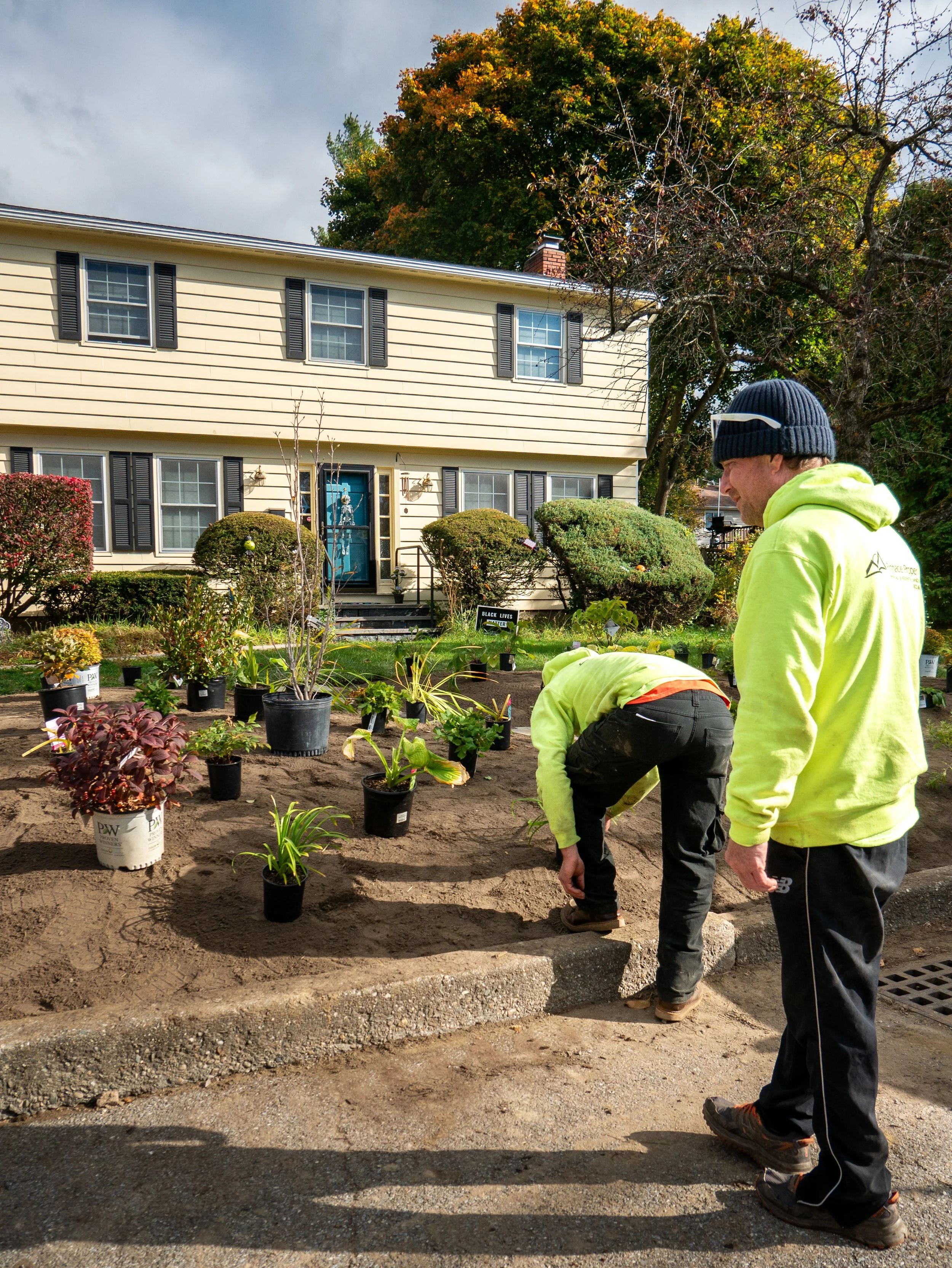
A landscape that depends almost entirely on summer flowers may lose much of its visual interest once temperatures cool. Using a mix of trees, shrubs, evergreens, grasses, and perennials can create more variety from season to season.
Evergreens can provide structure and screening after deciduous plants lose their leaves. Ornamental grasses and certain perennials may retain interesting forms and textures into fall. Trees and shrubs with strong fall color can make outdoor spaces especially appealing during September and October.
This broader approach is part of designing a four-season landscape rather than planning only for the months when everything is green.
Planting can also make a patio feel more comfortable.
Beds around selected edges can soften hardscape, provide a sense of enclosure, screen neighboring views, and make a gathering area feel connected to the rest of the property.
Create Smaller Spaces Within a Larger Backyard
A large open yard can be useful, but it doesn't always feel inviting in cooler weather.
Smaller outdoor rooms can create a greater sense of comfort.
A main patio might provide space for dining and grilling, while a separate fire pit area becomes a more intimate place to sit on cooler evenings. Planting beds, walls, grade changes, or pathways can help define those spaces without completely separating them.
This type of layout also gives the backyard more flexibility.
During summer, a larger patio may be the center of activity. In fall, a smaller gathering area with more shelter may become the preferred place to spend time.
Designing several connected spaces allows the landscape to adapt rather than forcing one area to serve every purpose.
Consider How the Space Connects to the House
Outdoor living works best when the relationship between inside and outside feels natural.
The location of doors, kitchens, dining areas, mudrooms, and other frequently used parts of the house can influence where outdoor spaces belong.
A patio used for dining generally makes more sense when carrying food outside is convenient. A gathering space used during cooler weather may feel more inviting when homeowners can easily step back inside without crossing the entire property.
Views matter as well.
During late fall and winter, homeowners may spend more time looking at the landscape from inside the house than actively using it. Well-positioned patios, trees, stonework, walls, and planting areas can continue adding interest even when no one is outside.
Considering these relationships is part of what helps professional landscape design create better long-term results.
Don't Try to Turn Vermont Into Summer All Year
Extending the outdoor season doesn't mean trying to make a Vermont backyard behave like a summer patio in October or November.
The goal is to design a landscape that works with the seasons.
That might mean using a fire pit during cool evenings rather than trying to heat a huge open patio. It could mean creating a sheltered sitting area where fall foliage can be enjoyed comfortably. In early spring, a sunny patio with good drainage may become usable well before the lawn has fully dried out.
Seasonal change can actually make outdoor spaces more interesting.
Instead of designing only around peak summer conditions, the landscape can offer different experiences throughout the year.
Plan for Snow Even When Designing for Fall
If an outdoor living area is going to remain useful late into the year, snow management should also be part of the conversation.
Think about where snow will be pushed from nearby driveways and walkways. Consider whether planting beds occupy areas that may be needed for snow storage. Steps and paths should be arranged in ways that remain practical when conditions change.
This doesn't mean designing every backyard primarily around winter maintenance.
It means recognizing that Vermont landscapes have to function through real seasonal conditions.
A patio, walkway, wall, or planting bed may look completely different under snow, but its location can still affect how easily the rest of the property works.
This is another reason designing outdoor spaces that last in Vermont's climate requires thinking beyond the finished summer photograph.
Plan the Whole Backyard Before Building One Feature
If you're considering several improvements, it can be helpful to think about the complete backyard before deciding which part gets built first.
Perhaps the long-term plan includes a patio, fire pit, walkway, privacy planting, retaining wall, and additional garden beds.
Those elements don't necessarily have to be installed at the same time.
But they should work together.
Creating a backyard master plan that allows a landscape project to be phased over time can help ensure that the first phase doesn't create problems for later improvements.
The patio can be positioned with the future walkway in mind. Grading can account for a later fire pit area. Planting beds can leave space for future circulation.
Planning ahead can make each stage feel like part of the same finished landscape.

A Longer Outdoor Season Starts With Better Design
There's no way to change Vermont's weather, and that's not really the goal.
A well-designed backyard simply makes better use of the conditions that are already there.
Sun exposure, wind, fire features, lighting, hardscaping, drainage, planting, pathways, and the relationship to the home can all influence whether an outdoor space feels inviting once summer ends.
When these elements are considered together, the usable season of a backyard can extend well into fall and begin earlier in spring.
More importantly, the property can feel intentional throughout the year rather than designed around only a few warm months.
Frequently Asked Questions About Cooler-Weather Outdoor Living
Can outdoor living spaces be used during fall in Vermont?
Yes. Patio location, wind protection, fire features, lighting, hardscaping, and thoughtful planting can all make an outdoor area more comfortable during cooler fall weather.
What features help extend the outdoor living season?
Fire pits or other fire features, sheltered seating areas, outdoor lighting, well-drained patios, easy connections to the house, and strategic screening from wind can all help extend the season.
Where should a fire pit be located in a backyard?
The best location depends on the property, circulation, surrounding structures, grade, views, and how the space will be used. A fire area can be integrated into the main patio or designed as a separate gathering space.
Why is drainage important for fall and spring outdoor living?
Rain, snowmelt, and saturated soil can make poorly drained areas difficult to use. Proper grading and drainage help patios, walkways, and gathering spaces remain more functional during wet conditions.
Should a patio be located in full sun?
Not necessarily. The right amount of sun depends on how and when the patio will be used. For cooler-season use, some sun exposure can provide additional warmth, while summer comfort may require shade or other design considerations.
Can an existing backyard be redesigned to work better in cooler weather?
Yes. Improvements may include new pathways, screening, planting, lighting, fire features, hardscaping, drainage work, or changes to the layout of existing outdoor living areas.
Design an Outdoor Space You Can Enjoy Beyond Summer
In Vermont, outdoor living will always change with the seasons. That's part of its appeal.
The goal isn't to create a backyard that feels the same in October as it does in July. It's to create a property that remains comfortable, functional, and interesting as conditions change.
A sunny patio, sheltered fire pit, well-placed walkway, thoughtful lighting, durable hardscaping, and year-round planting can all contribute to a landscape that stays useful beyond the height of summer.
For homeowners in Chittenden County considering a patio, fire pit, retaining wall, walkway, planting plan, or larger outdoor living project, Pinnacle Properties can help bring those elements together into one cohesive design.
Learn more about Pinnacle Properties' landscaping services or explore the Pinnacle Properties design process.