Fall Landscape Assessment: 7 Things to Look at Before Planning Next Year's Project
By the time fall arrives in Vermont, the landscape starts to look a little different. Plants begin to go dormant, leaves make it easier to see where water collects, and homeowners naturally spend less time thinking about outdoor entertaining.
That makes fall a surprisingly useful time to look at your property with fresh eyes.
Instead of focusing only on seasonal cleanup, take a few minutes to think about what worked this year and what didn't. Was there a part of the yard you rarely used? Did water collect somewhere after a summer storm? Did the patio feel too small when friends and family came over? Maybe you've been talking about adding a walkway, improving a slope, or creating a more defined outdoor living space.
Those observations can become the starting point for next year's landscape project.
Planning ahead also gives you time to think through what you actually want rather than making decisions under pressure once spring arrives. Here are seven areas worth looking at this fall.
1. Take a Look at the Areas You Rarely Use
Walk around your property and ask a simple question: Which parts of the yard aren't being used, and why?
An unused section might be too steep, too wet, difficult to access, or simply lacking a reason to spend time there. Sometimes the problem is less obvious. A large lawn may take up most of the backyard, but there may be no comfortable place to sit or gather.
These spaces can offer some of the best opportunities for a landscape improvement.
Depending on the property, an underused area could become a patio, planting area, walkway, gathering space, or another functional part of the landscape. A slope might be reworked with retaining walls to create more usable space. A disconnected portion of the yard could be tied into the rest of the property with a new path.
Before deciding what to build, spend some time figuring out why you're not using the space now. That answer will help shape a much better design.
2. Pay Attention to Drainage After Rain
Fall is a good time to notice how water moves across your property.
After a heavy rain, look for areas where water sits for extended periods. Check along walkways and patios, around planting beds, and near the house. You may also notice soil or mulch washing away from sloped areas.
These aren't just cosmetic issues. Persistent drainage problems can make portions of the property difficult to use and can contribute to erosion or damage to landscape features over time.
The important thing is to look at the cause rather than simply treating the wet spot. Grading, elevation changes, soil conditions, and the way water moves across the property all need to be considered.
If drainage is going to be part of a larger landscape project, identifying the issue before construction begins gives the design a chance to address it properly.
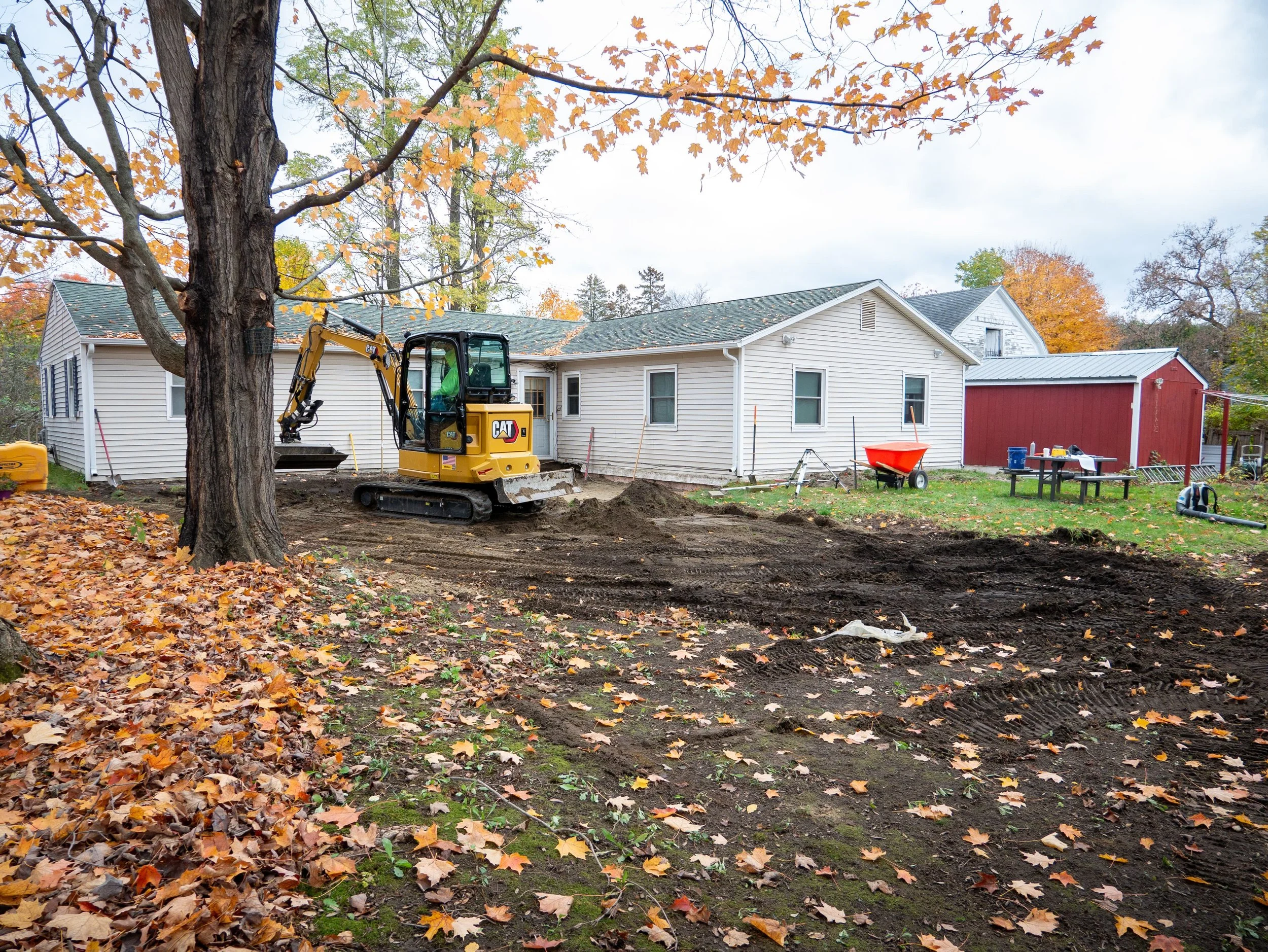
3. Evaluate Your Existing Patio and Walkways
Outdoor spaces get a lot of information from a busy summer.
Maybe your patio worked well for quiet dinners but felt crowded when you had guests. Perhaps the route from the driveway to the backyard isn't particularly convenient. You may have noticed that people naturally walk across the lawn instead of using the existing path.
Those observations are useful.
A landscape project doesn't always require starting over. Sometimes expanding an existing patio, changing its shape, adding a connecting walkway, or creating a better transition between spaces can make a significant difference.
Look at how people actually moved through the property this year. The way you used the space can reveal design opportunities that aren't obvious from a drawing or from looking at the yard during the winter.
4. Look at Slopes, Retaining Walls, and Erosion
Vermont properties often have natural changes in elevation. Those slopes can add character, but they can also make portions of a property harder to maintain and use.
Fall is a good time to inspect areas where soil appears to be shifting or washing away. Look for exposed roots, small channels caused by runoff, or places where mulch consistently moves downhill after storms.
Existing retaining walls should also be looked at periodically for signs of movement or other changes.
If a slope has always been a frustrating part of your property, next year could be the time to approach it differently. A landscape design may be able to use retaining walls, terracing, planting, or changes in grade to create a more functional space.
What currently feels like an awkward section of yard could eventually become one of the most interesting parts of the landscape.
5. Think About How Much Privacy You Want
Summer has a way of making privacy issues more obvious.
Trees and shrubs are full, outdoor spaces are being used, and neighbors are spending more time outside. You may have realized that your patio feels exposed or that you'd prefer more separation between your property and the road or neighboring homes.
Privacy doesn't necessarily require a fence or a wall.
Landscape design can use trees, shrubs, planting beds, changes in elevation, and the positioning of outdoor spaces to create a greater sense of privacy. In some cases, a combination of different plant heights can provide screening without making the property feel closed in.
If privacy is something you'd like to improve, it's worth thinking about it before the next planting season. Trees and shrubs take time to mature, so planning ahead is particularly important.

6. Consider What Your Landscape Is Missing
Sometimes an assessment is less about finding a problem and more about recognizing an opportunity.
Maybe you've always wanted a place for outdoor meals. Perhaps there's room for a more defined gathering area, a new walkway, additional planting, or a landscape feature that gives the backyard more structure.
Think back over the summer. What did you wish you had?
The answer could be as simple as more seating space or a better connection between the house and yard. It might also be a larger project involving several connected features.
This is where it helps to think about the property as a whole rather than choosing individual features in isolation. A patio, walkway, retaining wall, and planting area can have a much greater impact when they're designed to work together.
7. Decide What You Want the Property to Feel Like
A landscape project isn't only about adding features. It's also about creating a particular experience.
Do you want your backyard to feel like an extension of your home? Would you prefer a more natural Vermont setting? Are you looking for a space that's ideal for entertaining, a quiet place to relax, or simply a property that's easier to enjoy and maintain?
There isn't a single right answer.
Thinking about the overall feeling you want can help guide decisions about materials, planting, layout, and the relationship between different areas of the property. It also helps prevent a common problem: accumulating individual improvements that don't necessarily work together.
A landscape should feel intentional from one end of the property to the other.
Why Fall Is a Good Time to Start Planning
You don't have to wait for spring to start thinking about a landscape project.
In fact, fall can be one of the best times to step back and evaluate your property. The experience of the past season is still fresh, and you're more likely to remember what worked, what didn't, and what you wish you had changed.
Starting the conversation early also gives you time to develop a thoughtful plan. Larger landscape projects can involve decisions about layout, grading, materials, planting, access, and construction. Giving those decisions the time they deserve can make the process much smoother.
It also means you can head into the next season with a clear idea of what you want to accomplish rather than trying to figure everything out once the weather turns.

Turn This Year's Observations Into Next Year's Plan
The best landscape projects often start with a fairly simple observation.
"We never use that part of the yard."
"Water always collects there."
"We need somewhere bigger to entertain."
"That slope has always been difficult to deal with."
Those observations are valuable because they point toward the real goals of a project.
At Pinnacle Properties, landscape design and build projects are developed around the property, the site conditions, and the way homeowners want to use their outdoor spaces. Whether you're considering a new patio, retaining wall, walkway, planting design, or a larger landscape transformation, starting with an assessment of what isn't working is a good place to begin.
Fall gives you the opportunity to do exactly that.
Take a walk around your property. Pay attention to the areas you enjoy and the ones you avoid. Think about what you would change if you had the chance.
Then, when you're ready to start planning next year's project, you'll have a much clearer idea of where to begin.
Frequently Asked Questions
Is fall a good time to plan a landscape project in Vermont?
Yes. Fall is a useful time to evaluate your property because homeowners have the entire summer's experience to draw from. You can identify drainage problems, underused spaces, issues with existing hardscaping, and improvements you'd like to make before planning begins for the following season.
What should I look for when evaluating my landscape?
Look at areas that are difficult to use or maintain, drainage and erosion concerns, existing patios and walkways, slopes, privacy, planting areas, and outdoor spaces that may not be meeting your needs. It's also helpful to think about how you want to use the property in the future.
Can landscape problems be addressed as part of a larger design?
Yes. Issues such as drainage, difficult grades, erosion, and poor circulation can often be considered as part of a larger landscape plan. Addressing those challenges during the design stage can help create a more functional finished property.
How far in advance should I plan a landscape installation?
The appropriate timeline depends on the size and complexity of the project. Larger design-build projects can involve planning, design decisions, material selection, and scheduling, so starting the conversation well before the desired installation season can be beneficial.
Can an existing patio or landscape be redesigned instead of completely replaced?
In some situations, existing features can be incorporated into a new design. Whether that makes sense depends on the condition, location, materials, and relationship of the existing feature to the proposed improvements.
Can a landscape project be completed in phases?
Yes. A larger project can be developed as a master plan and completed in phases. This allows homeowners to prioritize the improvements that matter most while keeping future additions connected to the overall design.