Beyond the Patio: Landscape Features That Can Transform an Underused Backyard
A backyard can have plenty of space and still feel like it's missing something.
Maybe there's a large patch of lawn that nobody really uses. Perhaps the yard slopes more than you'd like, making it difficult to create a comfortable seating area. Or maybe the space simply doesn't have any clear connection between the house, garden, and other parts of the property.
It's a common situation. Homeowners look at their backyard and know they want to do something with it, but they're not sure what.
The answer isn't always a bigger patio.
A well-planned landscape can use a combination of hardscaping, planting, walkways, retaining walls, and outdoor living areas to give an underused property a sense of purpose. Instead of treating the backyard as one large open area, landscape design can divide it into spaces that serve different functions while still feeling connected.
For Vermont homeowners considering a landscape project, here are some of the features that can make a meaningful difference.
Start by Asking What the Backyard Is Missing
Before deciding what to install, it's worth considering why the backyard isn't being used in the first place.
Is there nowhere comfortable to sit? Does the grade make part of the property difficult to navigate? Is the yard too exposed to neighbors? Are there drainage problems? Or is there simply no obvious destination that draws people outside?
The answer can help determine what kind of improvement makes sense.
A backyard that lacks gathering space may benefit from a patio or defined outdoor seating area. A property with significant elevation changes might need retaining walls and terraced spaces. A yard that's difficult to navigate could be improved with a thoughtfully placed walkway.
This sounds simple, but it's an important distinction. The goal isn't to add as many features as possible. It's to address what's keeping the property from working the way you want it to.

Create More Than One Destination
One of the most effective ways to make a large backyard more useful is to create several destinations rather than relying on one central feature.
A patio might become the main gathering area, while a walkway leads to a quieter seating spot or garden. A retaining wall could create another level for planting. An open lawn area can remain available for recreation without being responsible for the entire backyard.
These spaces don't need to be separated dramatically. Changes in paving, planting, elevation, or even the orientation of furniture can establish a sense of definition.
The result is a backyard that gives people options. You can entertain near the house, relax somewhere quieter, or move through the landscape instead of simply looking out at one large expanse of grass.
Use Walkways to Connect the Landscape
Walkways are sometimes treated as purely practical features, but they can play a much bigger role in landscape design.
A well-designed path can guide people through the property and connect areas that might otherwise feel disconnected. It can lead from the house to a patio, continue toward a garden, or provide a natural route around a change in elevation.
The path itself also becomes part of the landscape.
Its width, material, shape, and surrounding planting all contribute to the character of the property. A straight walkway may suit one home, while another landscape may benefit from a softer route that follows the natural contours of the yard.
In either case, the path should feel like it belongs there rather than looking like it was added simply because the backyard needed a walkway.
Make Use of Sloped Areas
A slope doesn't have to be wasted space.
In Vermont, changes in elevation are common, and they can present both challenges and opportunities. A steep portion of a backyard may be difficult to mow or use, but it can also provide the foundation for a more interesting landscape.
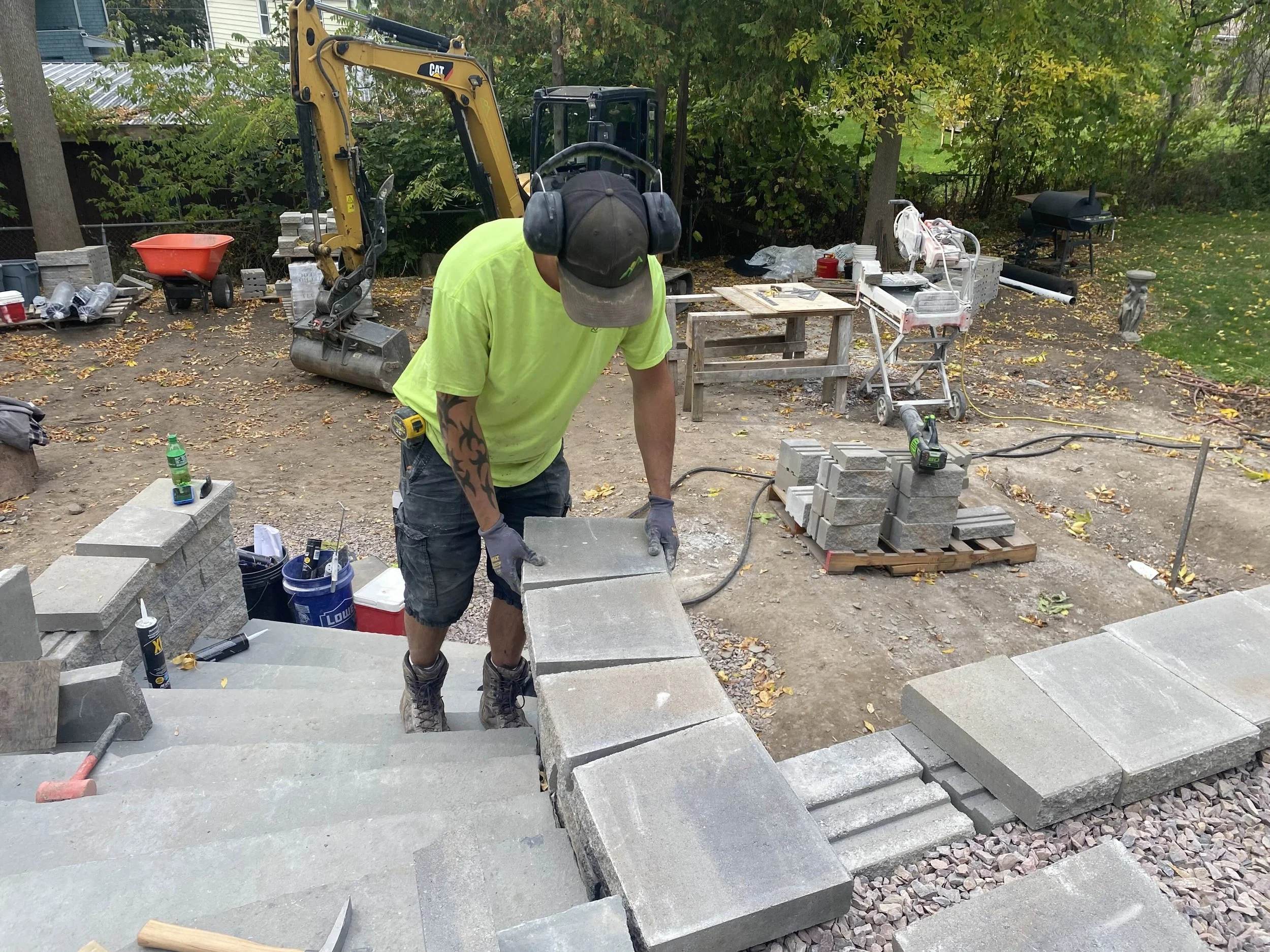
Retaining walls can help create level areas where none existed before. Those areas might become planting beds, lawn spaces, walkways, or outdoor gathering areas depending on the property and the homeowner's goals.
Terracing can also help give a large backyard a stronger sense of scale. Instead of one long slope, the landscape becomes a series of connected spaces.
The important part is approaching the grade as part of the design rather than trying to ignore it.
Add Planting With a Purpose
Planting can transform a backyard, but it shouldn't simply be used to fill empty space.
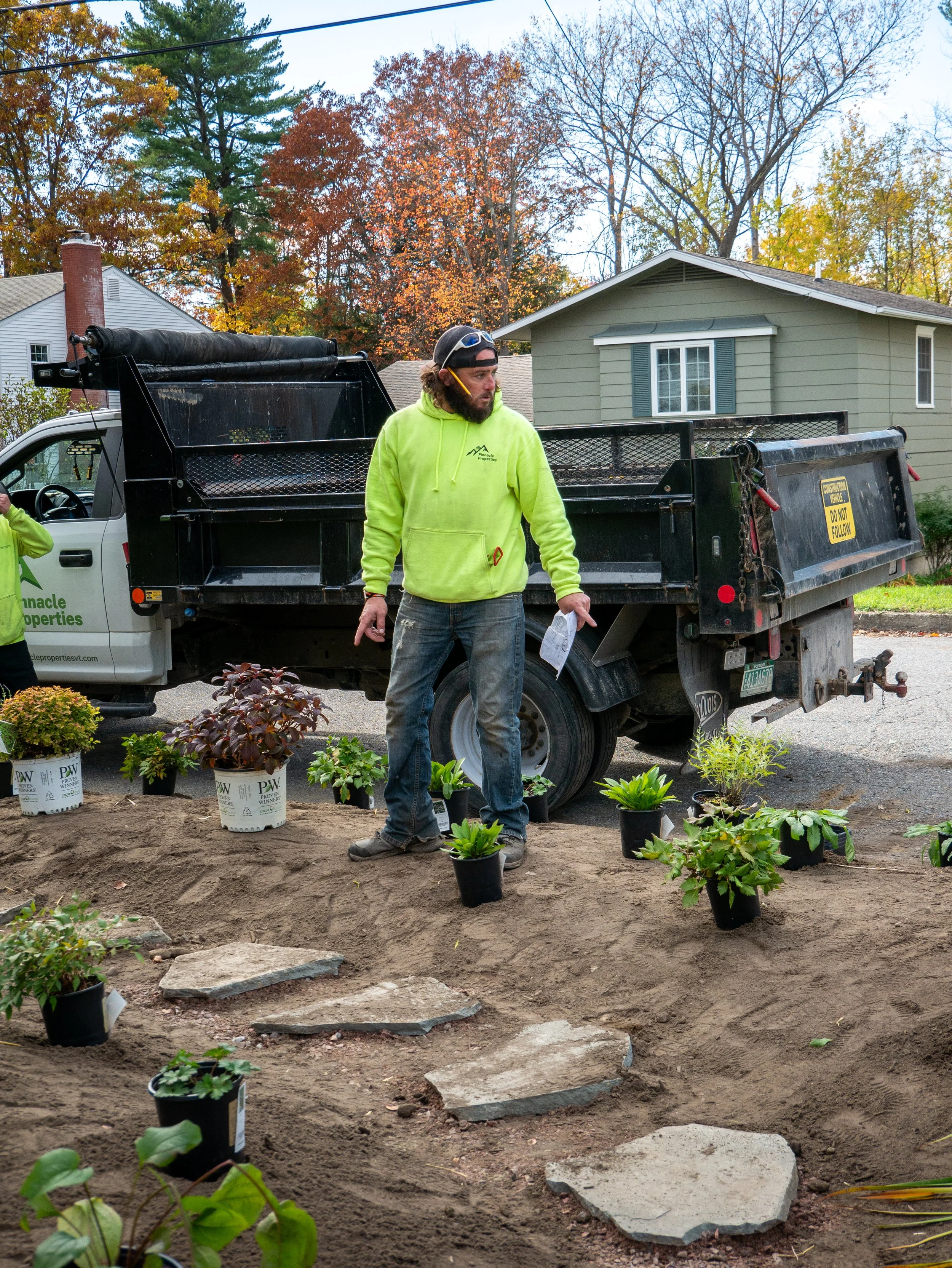
Strategic planting can provide privacy, define the edges of a patio, soften retaining walls, frame views, or create a transition between different areas of the property.
It can also add seasonal interest. Vermont's landscape changes considerably throughout the year, so selecting a thoughtful combination of trees, shrubs, perennials, and other plant material can give the property a different character as the seasons progress.
Placement matters just as much as plant selection. A row of shrubs may create privacy along one property line, while a smaller grouping near a patio can make the area feel more enclosed and comfortable.
When planting is integrated into the overall landscape plan, it becomes part of the architecture of the backyard rather than an afterthought.
Consider a Retaining Wall as a Design Feature
Retaining walls are often installed because a property needs help managing elevation or erosion. Retaining walls are also great at improving drainage. That practical function is important, but a well-designed retaining wall can also become one of the defining features of the landscape.
A wall can establish a new level, create a boundary around an outdoor living area, or provide an opportunity for planting. It can also add structure to a property that otherwise feels visually flat or disconnected.
Material selection is particularly important. The wall should complement other hardscape elements and the architecture of the home so it feels integrated with the rest of the property.
This is a good example of why landscape design is about more than choosing individual features. A retaining wall can solve a problem and improve the appearance of the property at the same time when it's considered as part of the larger plan.
Give Outdoor Living Areas a Natural Connection to the Home
Outdoor spaces tend to get more use when they're easy to access.
A patio tucked into an inconvenient corner of the backyard may look attractive, but it won't necessarily become a favorite gathering place. A well-positioned outdoor living area, on the other hand, can create a natural extension of the home's interior.
The connection can be reinforced through walkways, steps, planting, and changes in material. Sightlines are important, too. Being able to see the outdoor space from inside the house can make the backyard feel like part of the home even when nobody is outside.
The best location will depend on the property, the home's layout, sun exposure, existing vegetation, and how the space will be used.
Don't Forget About the Spaces Between Features
Some of the most successful landscape designs aren't defined by one dramatic feature. They're successful because everything between those features has been considered.
The transition from the patio to the lawn matters. So does the area between a retaining wall and the house. The space beside a walkway can become a planting bed instead of an awkward strip of grass.
These transitions are what make a landscape feel cohesive.
Without them, individual features can look like separate projects. With them, the backyard begins to feel like one connected outdoor environment.
Think About the Landscape as a Long-Term Investment
A backyard doesn't have to be transformed all at once.
In fact, many homeowners choose to approach larger landscape projects in phases. A master plan can establish the overall vision while allowing the work to happen according to budget, timing, and priorities.
For example, the first phase might address grading and install a primary patio. Future phases could add planting, walkways, retaining walls, or additional outdoor spaces.
Planning those future improvements from the beginning helps prevent the common problem of adding features that don't quite fit together later.
It also gives homeowners a clearer idea of where they're headed before construction begins.
A Backyard Should Work for Your Life
The best outdoor spaces aren't necessarily the biggest or most elaborate. They're the ones homeowners actually use.
For one family, that might mean a comfortable gathering area surrounded by planting. For another, it could be a series of connected spaces that make a challenging property easier to navigate. Someone else may simply want to turn an unused section of lawn into a more attractive and functional part of the landscape.
There isn't one right answer.
At Pinnacle Properties, landscape design and build projects are developed around the property and the people who will use it. By considering grading, hardscaping, planting, circulation, and outdoor living together, an underused backyard can become something much more valuable than an attractive view from the kitchen window.
It can become a place you actually want to spend time.
Frequently Asked Questions
What landscape features can make an underused backyard more functional?
Depending on the property, options can include patios, walkways, retaining walls, planting beds, outdoor gathering areas, and redesigned lawn spaces. The best combination depends on the site's layout, grade, drainage, and how the homeowner wants to use the yard.
Do I need a large backyard to create a custom outdoor space?
No. Good landscape design isn't dependent on having a large property. Smaller yards can benefit from carefully planned patios, walkways, planting areas, and other features that make the most of the available space.
Can retaining walls make a sloped backyard more usable?
They can. Retaining walls can create level areas on sloped properties, which may provide opportunities for patios, planting beds, walkways, or other functional spaces. Proper design and construction are important, particularly where drainage and soil stability are concerns.
How can landscaping improve an underused backyard?
Landscape design can give different parts of the yard a specific purpose. Planting can define spaces and add privacy, walkways can improve circulation, and hardscape features can create destinations for gathering and relaxing.
Can I complete a backyard landscape project in phases?
Yes. A larger landscape project can often be planned as a series of phases. Developing an overall design first helps ensure that future additions work with the portions of the landscape that are completed initially.
What should I consider before planning a backyard landscape installation?
Consider how you currently use the yard, what prevents you from using it more, how you want to spend time outside, and which areas you'd like to change. Site conditions such as grading, drainage, sun exposure, existing vegetation, and access should also be considered during the design process.