How Retaining Walls Improve Drainage, Function, and Property Value
Retaining walls are often viewed as decorative landscape features, but their role goes far beyond appearance. In Vermont, where sloped terrain, seasonal runoff, and freeze–thaw cycles are common, retaining walls are frequently an essential structural component of a well-designed landscape.
When properly designed and installed, retaining walls improve drainage, stabilize soil, create usable outdoor areas, and enhance long-term property value. They solve functional problems while also contributing to a more organized and visually appealing outdoor space.
If your property has uneven terrain, erosion issues, or underused areas, a retaining wall may be one of the most impactful landscape improvements you can make.
What Is a Retaining Wall?
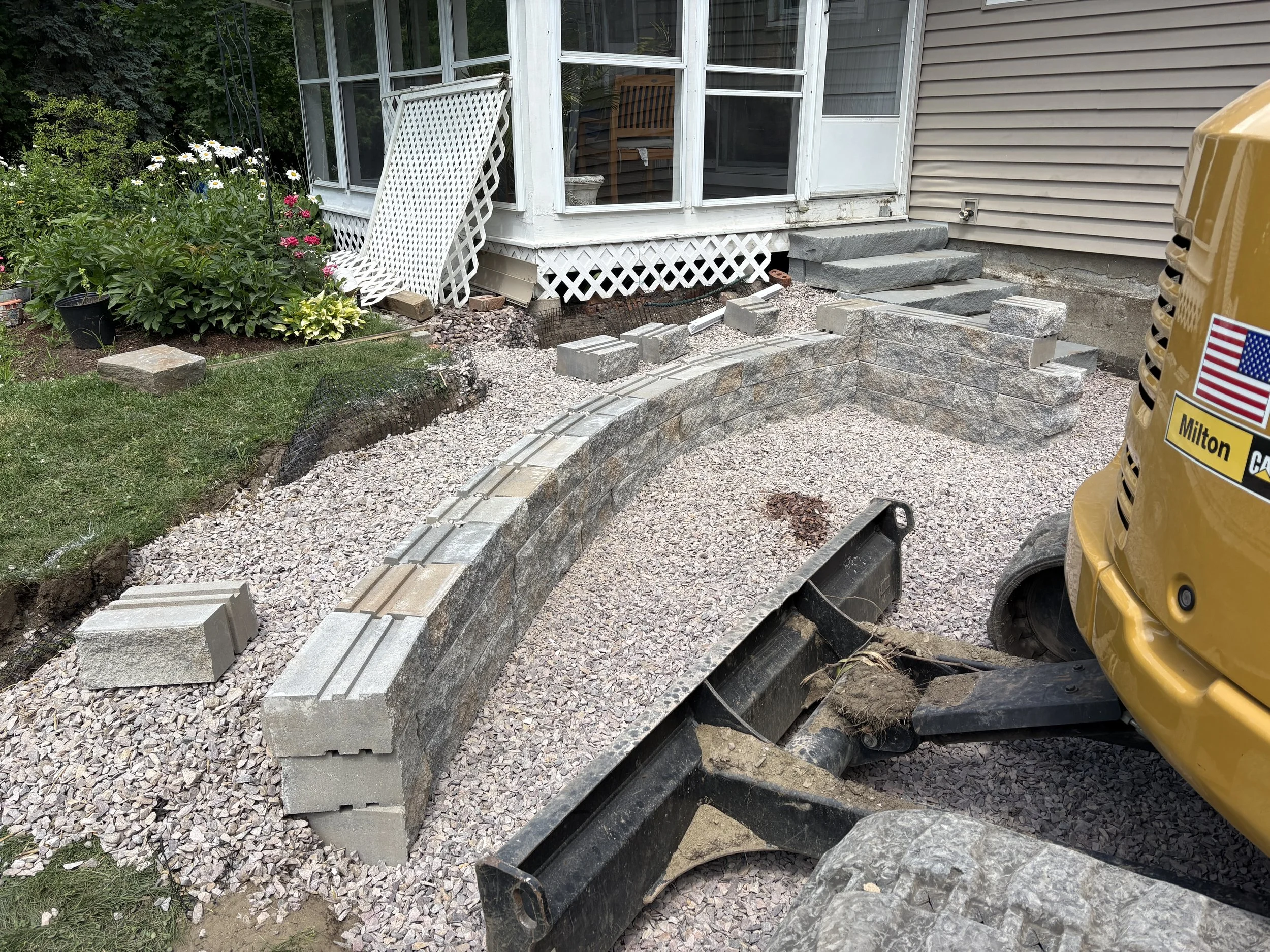
A retaining wall is a structural feature designed to hold back soil and manage elevation changes on a property. While retaining walls can vary in size and style, their primary purpose is to stabilize the landscape and control movement caused by gravity, water, and shifting soil.
Retaining walls are commonly used to:
Manage sloped terrain
Reduce erosion
Improve drainage
Create level outdoor areas
Support patios, walkways, and hardscapes
In many cases, retaining walls make outdoor spaces more functional and safer while improving the overall layout of the property.
How Retaining Walls Help with Drainage
One of the biggest advantages of retaining walls is their ability to improve water management.
In Vermont, heavy rain, snowmelt, and seasonal freeze–thaw cycles can cause water to move unpredictably across a property. Without proper drainage solutions, this can lead to:
Soil erosion
Standing water
Damage to hardscapes
Muddy or unusable areas
Foundation concerns
A professionally designed retaining wall works alongside grading and drainage systems to redirect water flow and stabilize vulnerable areas.
Proper Drainage Is Critical
A retaining wall should never simply “hold back dirt.” Proper installation includes:
Drainage planning behind the wall
Gravel backfill and drainage layers
Water management systems to reduce pressure buildup
Without these components, water pressure can build behind the wall over time, causing structural failure or movement.
Retaining Walls Create More Usable Outdoor Space
Sloped properties can make it difficult to fully use outdoor areas. Uneven terrain often limits where patios, seating spaces, walkways, or gathering areas can be installed.
Retaining walls help transform difficult terrain into functional space by:
Creating level sections of the property
Defining outdoor living areas
Improving accessibility and movement
Expanding usable square footage outdoors
For many homeowners, retaining walls make it possible to use parts of the property that previously felt inaccessible or impractical.
Preventing Soil Erosion and Landscape Damage
Erosion is one of the most common problems on sloped properties. Over time, rain and runoff gradually wear away soil, damaging both landscaping and surrounding structures.
Signs of erosion may include:
Exposed roots or shifting soil
Mulch or gravel washing away
Gullies forming after storms
Uneven ground or settling
Retaining walls stabilize the landscape and help prevent soil movement before larger issues develop.
This is especially important in Vermont, where spring thaw and heavy precipitation can accelerate erosion quickly.
Supporting Hardscape Installations
Retaining walls often work together with other landscape features such as:
Patios
Walkways
Outdoor seating areas
Steps and entryways
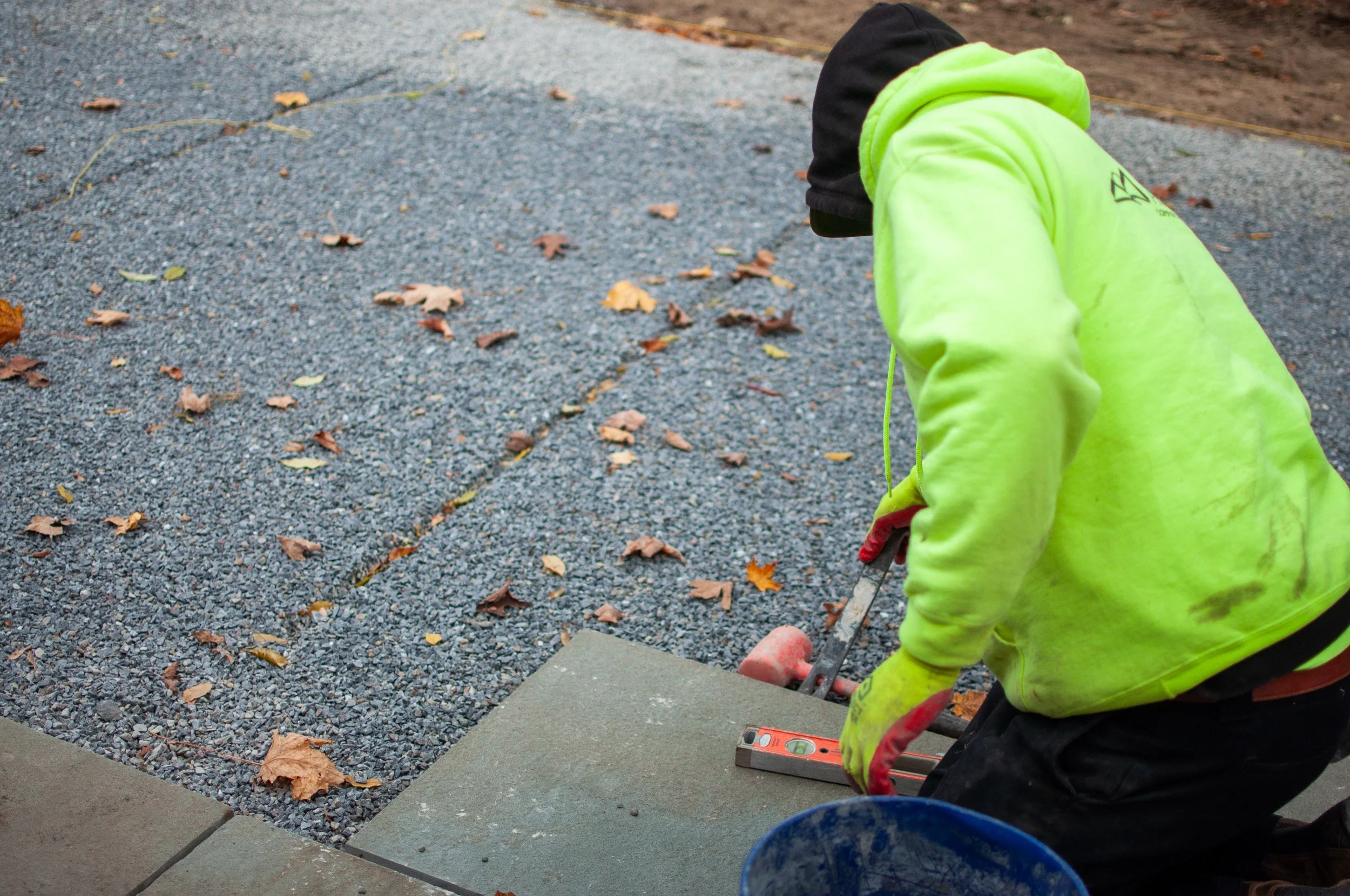
On sloped properties, retaining walls may be necessary to properly support these installations and ensure long-term stability.
By integrating retaining walls into the overall design plan, homeowners can create outdoor spaces that are both structurally sound and visually cohesive.
Improving Property Appearance and Layout
In addition to their functional benefits, retaining walls contribute significantly to the overall appearance of a property.
A thoughtfully designed retaining wall can:
Add structure and definition
Create cleaner transitions between elevations
Improve curb appeal
Make the property feel more organized and intentional
Rather than looking like a purely structural element, modern retaining walls are often designed to complement the architecture and surrounding landscape.
Why Professional Installation Matters
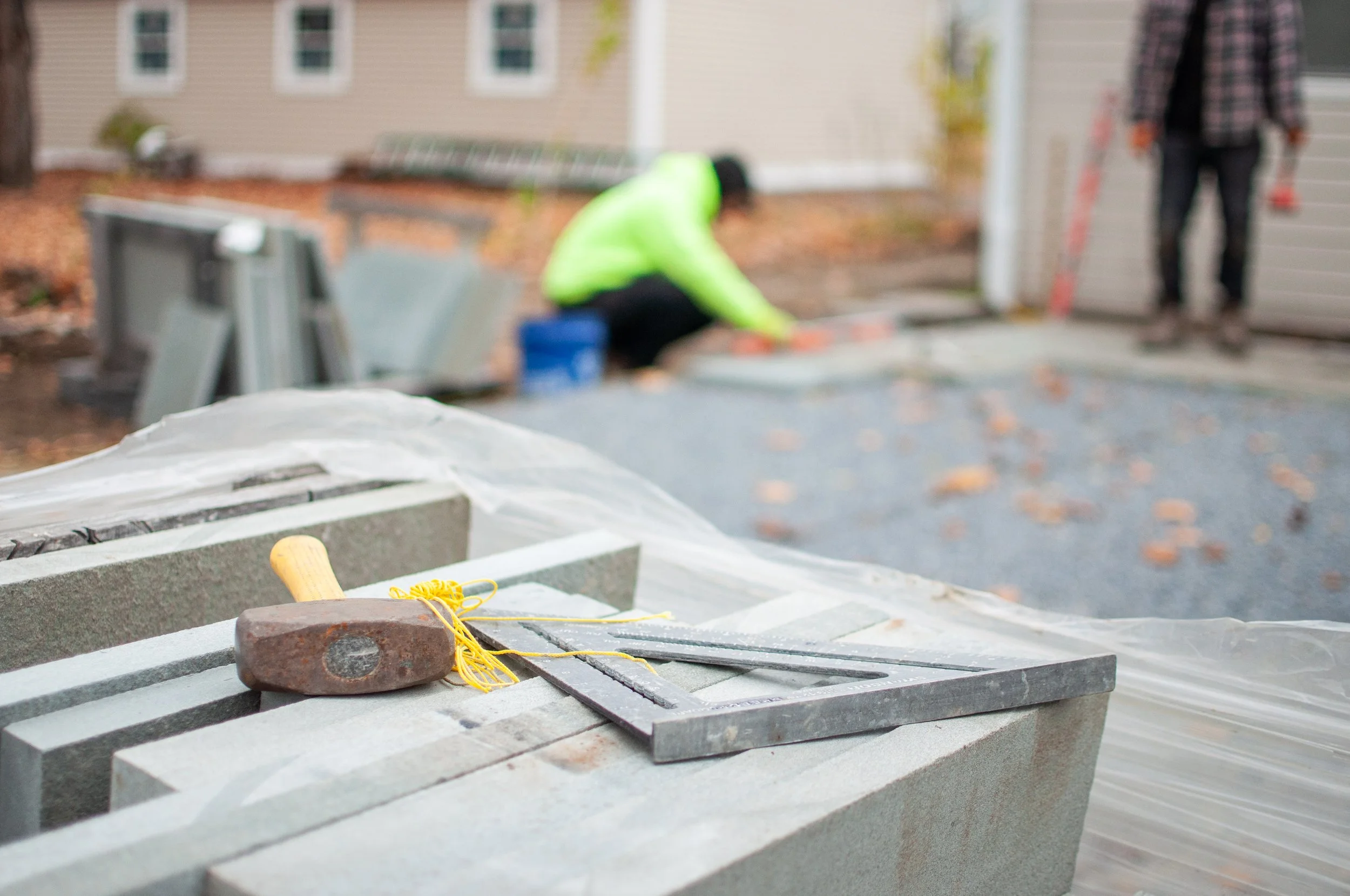
Retaining walls are structural systems—not simply stacked blocks or stones. Proper engineering, grading, and drainage are essential to long-term performance.
Poorly installed retaining walls can experience:
Leaning or bowing
Cracking or separation
Water pressure failure
Premature settling
Professional installation ensures:
Proper excavation and base preparation
Correct drainage integration
Structural stability
Long-term durability in Vermont conditions
Because retaining walls deal directly with soil pressure and water movement, precision matters.
Retaining Walls and Long-Term Property Value
Retaining walls are one of the few landscape features that combine:
Structural improvement
Functional benefits
Visual enhancement
By solving drainage and erosion issues while improving usability, retaining walls can contribute meaningful long-term value to a property.
Homeowners often benefit from:
Reduced maintenance concerns
Improved outdoor functionality
Better long-term property performance
Enhanced visual appeal
In many cases, retaining walls protect other landscape investments by helping the property manage water and terrain more effectively.
Choosing the Right Retaining Wall Design
Every property is different, which means retaining wall design should always be tailored to site conditions and project goals.
Important considerations include:
Height and scale of the wall
Drainage requirements
Material selection
Relationship to nearby hardscapes and structures
A professional design-build approach ensures the retaining wall functions properly while fitting naturally into the overall landscape.
Building a Landscape That Performs Over Time
In Vermont, outdoor spaces need to do more than look good—they need to perform through changing seasons and challenging weather conditions.
Retaining walls play an important role in creating landscapes that are:
Stable
Functional
Durable
Easier to maintain
Whether the goal is improving drainage, creating usable outdoor space, or addressing erosion concerns, a professionally designed retaining wall can provide long-term benefits for both the property and the people who use it.
If your landscape includes slopes, drainage challenges, or underused terrain, now may be the right time to explore how a retaining wall could improve your property.
Frequently Asked Questions About Retaining Walls in Vermont
Do retaining walls help with drainage?
Yes. Properly designed retaining walls help redirect water flow, reduce erosion, and manage runoff on sloped properties.
How long do retaining walls last?
A professionally installed retaining wall built with proper drainage and base preparation can last for many years with minimal maintenance.
Are retaining walls only for steep properties?
No. Retaining walls can also be used to define spaces, improve layout, and support patios or walkways even on moderately sloped properties.
What materials are best for retaining walls in Vermont?
Durable wall systems and materials designed for freeze–thaw climates are ideal for Vermont properties.
Can retaining walls increase property value?
Yes. Retaining walls improve functionality, drainage, curb appeal, and usability, all of which can contribute to long-term property value.