How to Design a Patio That Works with Your Home and Landscape
A well-designed patio does more than add outdoor living space. It becomes a natural extension of your home, a gathering place for friends and family, and a seamless part of your Vermont landscape. But creating a patio that truly works requires more than choosing nice pavers or picking a sunny spot in the yard.
The best patios are thoughtfully designed to complement your home's architecture, integrate with the surrounding landscape, and support the way you actually want to live outdoors.
At Pinnacle Properties, we've helped countless Vermont homeowners design and build patios that feel like they've always belonged. Here's how to approach your patio design with intention - so it works beautifully with both your home and your landscape.
Start with Your Home's Architecture
Your patio should feel like a natural extension of your home, not an afterthought. The key is to create visual and functional harmony between indoor and outdoor spaces.
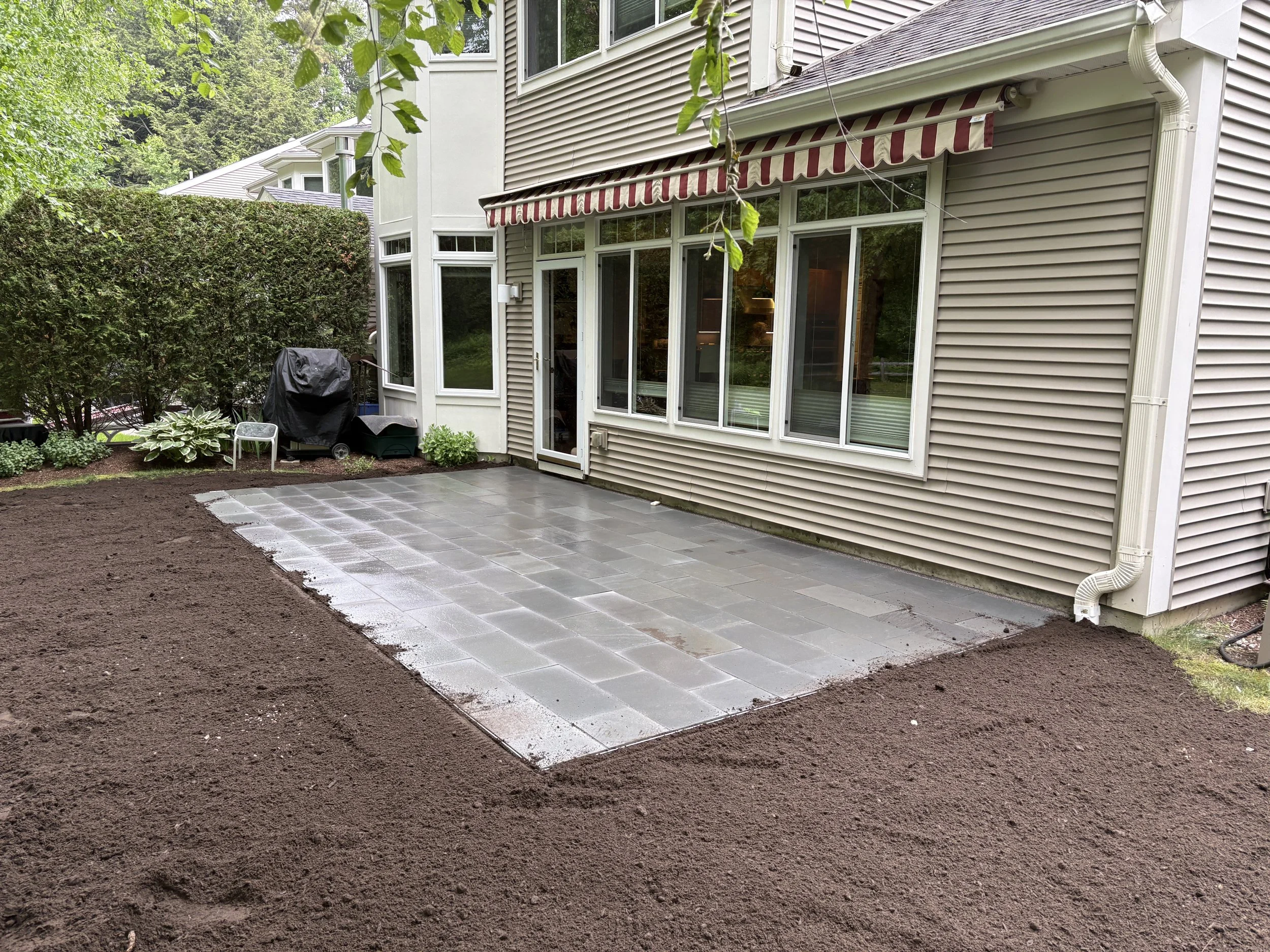
Match Materials and Style
Look at the materials, colors, and architectural style of your home. A colonial-style house might pair beautifully with classic brick or bluestone pavers, while a modern Vermont home could shine with clean-lined concrete or geometric stone patterns.
Consider:
Exterior colors: Choose patio materials that complement your home's siding, trim, or stone accents
Roofline and angles: Echo architectural lines in your patio layout or edging
Existing hardscaping: Match or complement driveways, walkways, or front steps for a cohesive look
Think About Access and Flow
Where does it make sense for your patio to connect to your home? Most patios work best when they're easily accessible from high-traffic areas like the kitchen, dining room, or living room. French doors, sliding glass doors, or a back entrance can create a seamless indoor-outdoor transition.
The goal is to make stepping outside feel effortless - not like you're traveling to a separate zone of your property.
Work with Your Landscape, Not Against It
Great patio design doesn't fight the natural characteristics of your property. Instead, it works with elevation changes, sun patterns, views, and existing landscape features.
Assess Your Site Conditions
Before choosing a location or layout, observe your property carefully:
Sun and shade patterns: Track where the sun hits throughout the day. A west-facing patio gets beautiful evening light but can be hot in summer. A north-facing space might need more intentional warmth through design elements.
Drainage and grading: Low-lying areas where water collects are poor patio locations. You'll want a site that naturally drains well or can be graded properly during installation.
Views and privacy: What do you want to see from your patio? What do you want to screen out? Consider sightlines to neighbors, roads, or beautiful landscape features.
Existing trees and plantings: Mature trees provide shade and character but require thoughtful patio placement to avoid root disruption and ensure long-term stability.
Embrace Elevation Changes
If your property has slopes or grade changes, don't assume you need to flatten everything. Thoughtful design can turn elevation into an asset.
Multi-level patios create visual interest and distinct zones
Retaining walls add dimension and seating opportunities
Steps can become design features with integrated lighting or plantings
Vermont's varied topography offers opportunities for creative patio design that feels natural to the land.
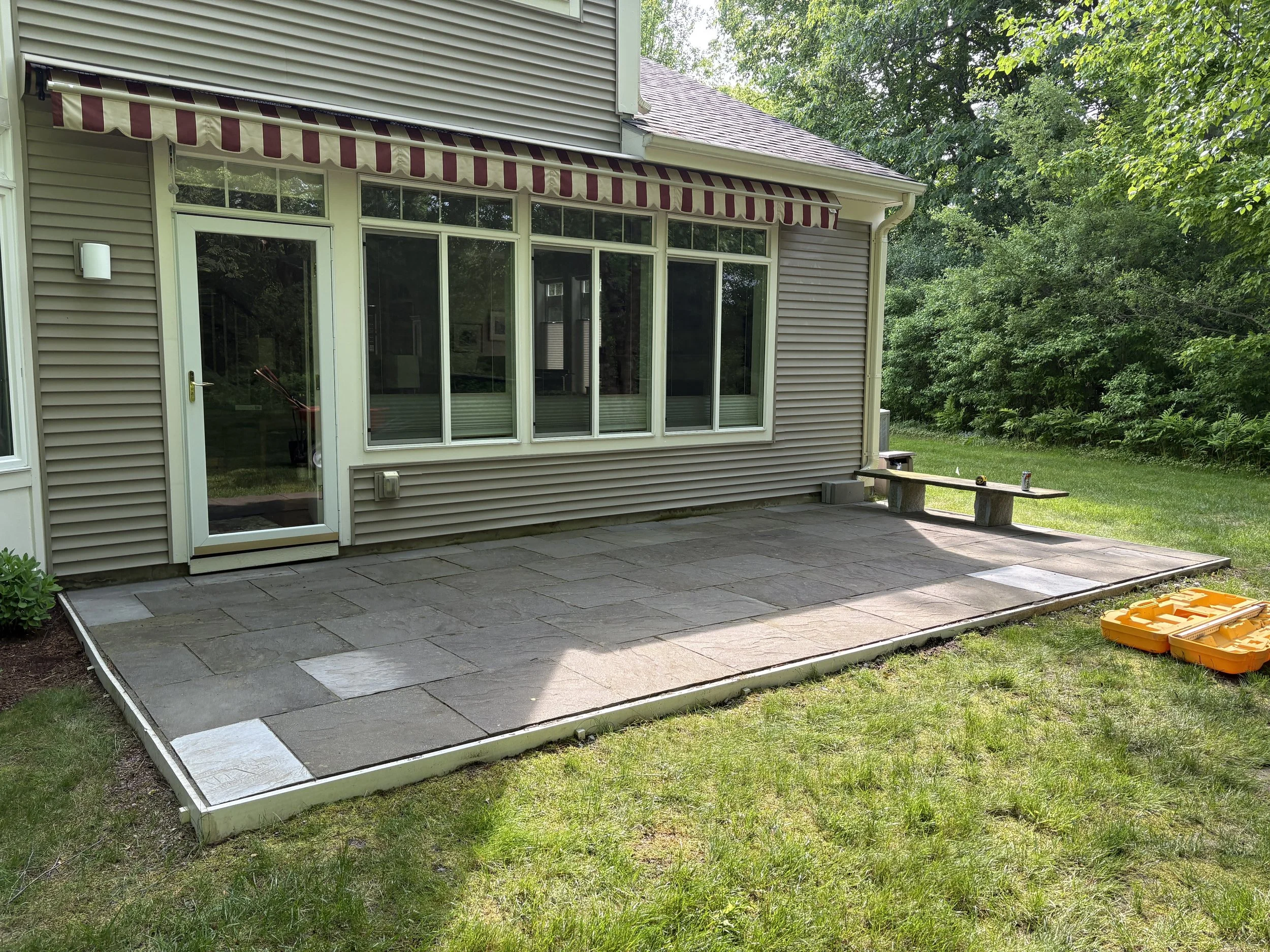
Consider How You'll Actually Use the Space
A patio should support your lifestyle. Before finalizing your design, think honestly about how you'll use the space.
Define Your Primary Uses
Are you creating an outdoor dining area? A spot for morning coffee? A space for entertaining large groups? A quiet reading nook?
Your intended use will guide decisions about:
Size: A dining patio for eight needs different dimensions than a cozy sitting area for two
Furniture placement: Leave room for chairs to pull out, traffic flow around seating, and comfortable movement
Amenities: Built-in grills, fire pits, outdoor kitchens, or water features should be planned from the start
Plan for Comfort and Function
Think beyond aesthetics to the practical elements that make a patio enjoyable:
Shade options: Pergolas, umbrellas, or strategically placed trees can make your patio usable during hot Vermont summer afternoons.
Privacy screening: Fencing, plantings, or decorative screens create intimacy without feeling closed in.
Lighting: Plan for both ambient lighting (string lights, lanterns) and functional lighting (path lights, step lights) to extend usability into evening hours.
Storage: Consider where you'll store cushions, grilling tools, or outdoor entertaining supplies.
Choose Materials That Make Sense for Vermont
Vermont's climate demands durable materials that can handle freeze-thaw cycles, snow load, and seasonal moisture. Not all patio materials perform equally here.
Proven Options for Vermont Patios
Natural stone: Bluestone, granite, and fieldstone offer timeless beauty and excellent durability. They handle Vermont winters well and age gracefully.
Concrete pavers: High-quality pavers come in many styles and colors, offer good freeze-thaw resistance, and can be replaced individually if needed.
Brick: Classic and durable, brick creates warmth and pairs well with traditional New England architecture.
Flagstone: Irregular flagstone creates a natural, organic look that blends beautifully with Vermont landscapes.
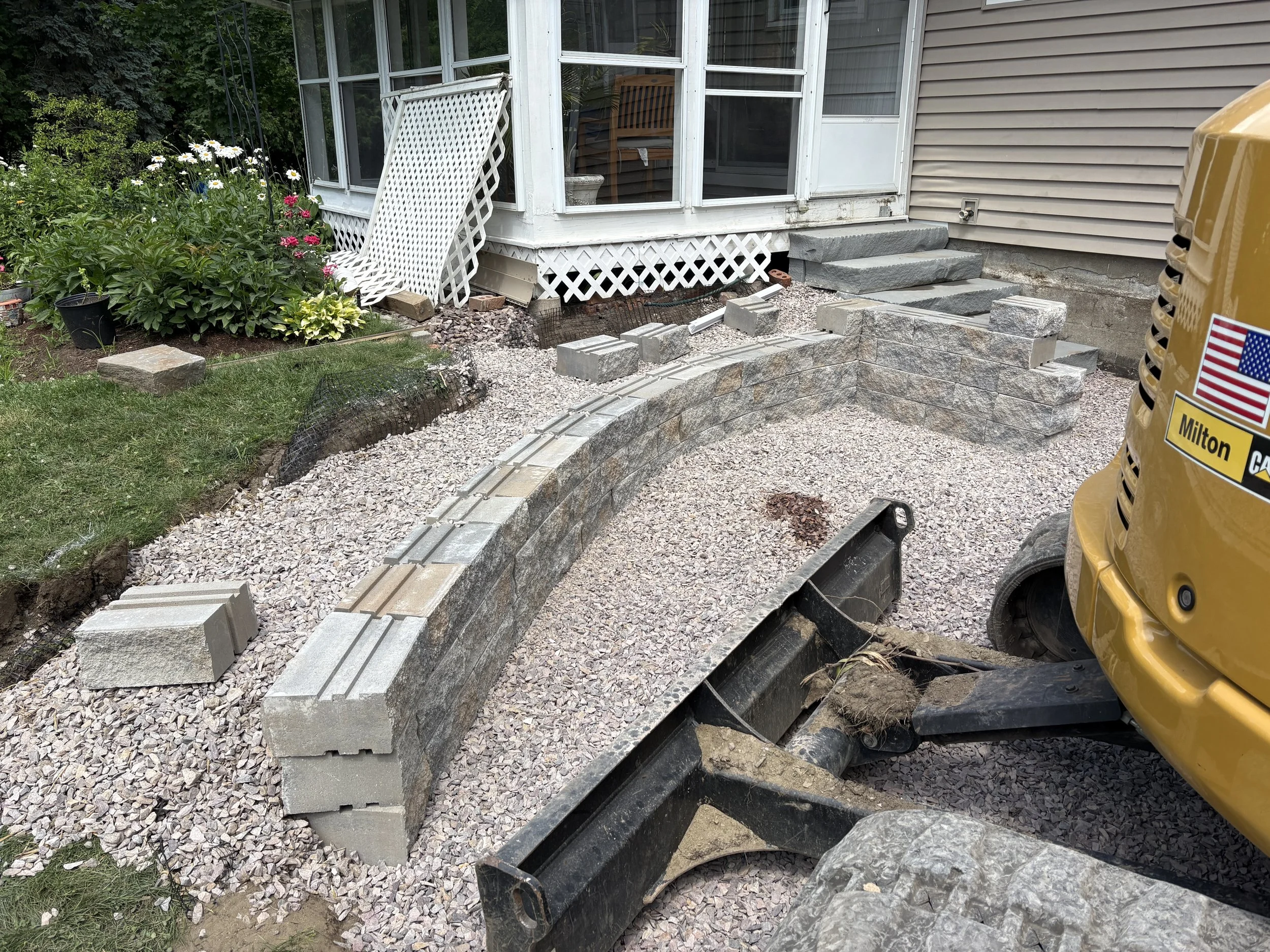
Avoid Common Material Mistakes
Some materials look beautiful but don't perform well in Vermont's climate:
Smooth concrete can become dangerously slippery when wet or icy
Certain stones are prone to flaking or cracking through freeze-thaw cycles
Wood decking requires significant maintenance and may not suit every aesthetic
Working with a local Vermont company ensures you're choosing materials proven to last in our specific conditions.
Integrate Plantings and Softscape
A patio surrounded by hardscape alone can feel stark. Thoughtful plantings soften edges, add color and texture, and help your patio feel connected to the broader landscape.
Frame your patio with:
Perennial gardens that provide seasonal color
Ornamental grasses that add movement
Evergreens for year-round structure
Ground covers that spill over edges for a softer transition
Container Gardens
If your patio design doesn't include planting beds, containers offer flexibility. They can be moved seasonally, changed out as plants fade, and positioned to define space or add privacy.
Consider Vertical Elements
Climbing vines on pergolas, trellises, or arbors add height and visual interest while creating shade and privacy over time.
Plan for Long-Term Maintenance
The best patio design balances beauty with practicality. Consider ongoing maintenance requirements during the planning phase.
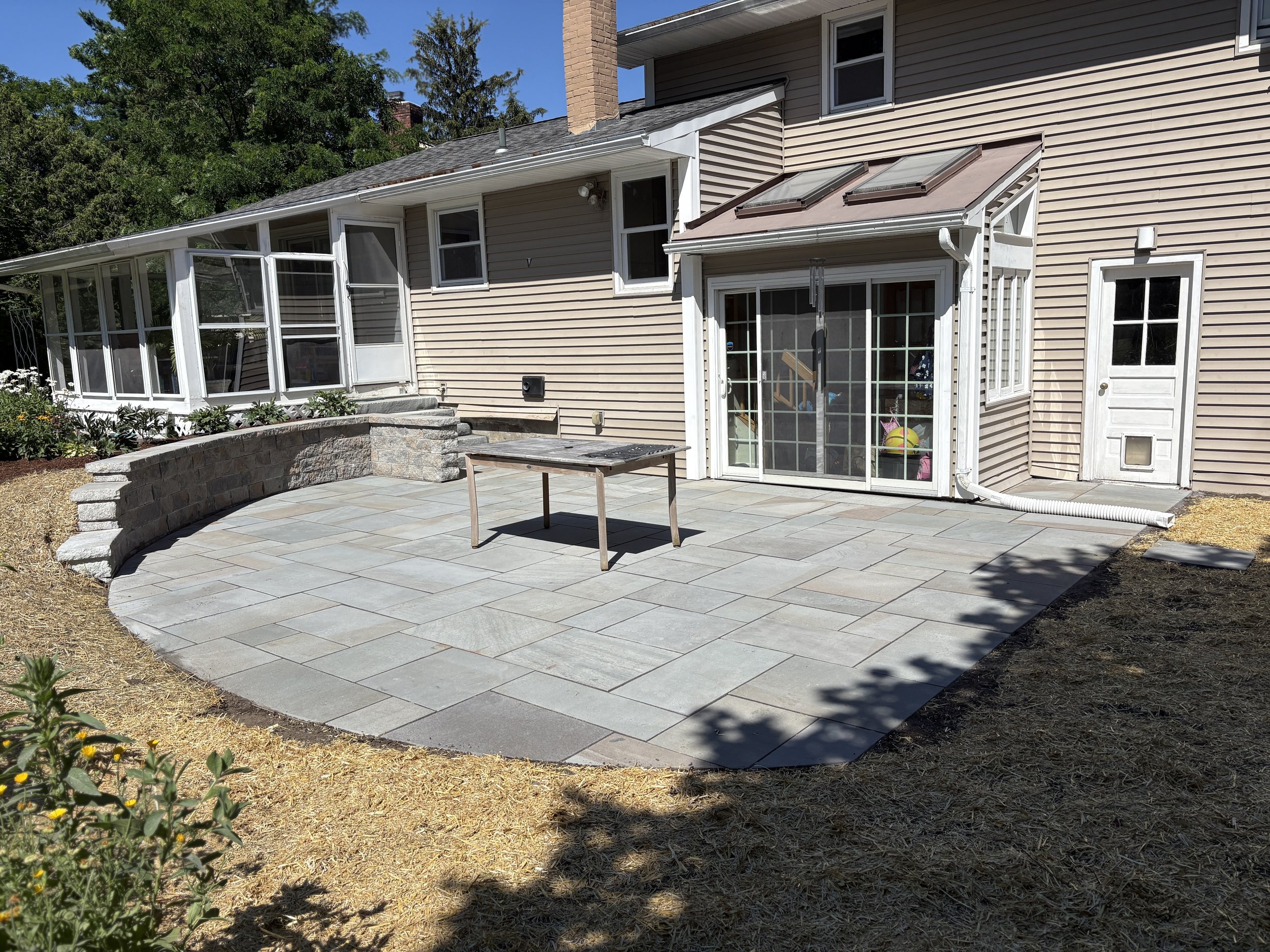
Drainage Is Everything
Poor drainage leads to:
Standing water and ice buildup
Premature deterioration of materials
Weed growth in joints
Unstable paver settling
Proper base preparation, grading, and drainage solutions should be built into your patio from day one.
Material Longevity
Choose materials and installation methods that minimize long-term upkeep:
Permeable paver systems reduce water issues
Polymeric sand between pavers resists weeds and washout
Proper edging prevents paver shifting
A well-built patio requires minimal maintenance and lasts for decades.
Work with Professionals Who Understand Vermont
Designing and building a patio that truly works requires more than good ideas - it requires technical knowledge, local experience, and quality craftsmanship.
At Pinnacle Properties, we approach every patio project by:
Listening to your vision: We start by understanding how you want to live outdoors and what your property offers.
Evaluating your site: We assess drainage, grading, sun exposure, and landscape features to identify the best location and design approach.
Creating a custom plan: No two properties are the same. We design patios that fit your home, your landscape, and your lifestyle.
Using proven materials: We work with high-quality materials suited to Vermont's climate and built to last.
Building for the long term: Proper base preparation, drainage, and installation ensure your patio stays beautiful and functional for years to come.
Final Thoughts
A great patio doesn't just happen - it's the result of thoughtful planning, skilled design, and quality construction. When done right, your patio becomes one of the most-used and most-loved spaces on your property.
Whether you're envisioning a quiet morning coffee spot, an outdoor dining area for summer gatherings, or a multi-level entertaining space, the key is creating a design that works seamlessly with your home's architecture and your landscape's natural character.
Ready to design a patio that feels like it's always belonged? Pinnacle Properties is here to help you create an outdoor space you'll love for years to come.