What Makes a Landscape Design Feel Custom? 7 Details That Make a Difference
A landscape can be well built and still feel like something is missing.
Maybe the patio looks nice, but it doesn't seem connected to the house. The planting beds may be attractive, yet they don't quite fit the architecture. A walkway might get you from the driveway to the front door, but it feels more like a route than part of the landscape.
Those details matter.
A truly custom landscape isn't simply a collection of attractive features. The materials, layout, planting, grading, and outdoor living areas all have a relationship with the property. They reflect how the homeowners want to use the space and take into account the characteristics of the site itself.
For Vermont homeowners considering a new landscape installation, these are some of the details that can make the difference between a landscape that looks good and one that feels like it was designed specifically for the property.
1. The Design Works With the Architecture of the Home
A landscape should complement the house rather than compete with it.
The home's architecture, exterior materials, rooflines, windows, and overall character can all influence the landscape design. A modern home may call for cleaner lines and a simpler material palette, while a traditional Vermont property might lend itself to natural stone, softer planting beds, and more informal transitions.
This doesn't mean every element needs to match perfectly. In fact, too much matching can make a landscape feel overly planned. The goal is to create connections between the house and the landscape so the outdoor space feels like a natural extension of the property.
That might mean repeating a stone color from the home's exterior in a walkway or retaining wall. It could also mean using planting to soften a hard architectural edge or framing a particularly attractive part of the house.
Those decisions aren't necessarily obvious when you're standing in the finished yard. They are part of what makes the finished project feel right.
2. The Layout Responds to the Property
Every property has its own shape, elevation, sun exposure, access points, and existing features. A custom design takes those conditions seriously instead of trying to force the property into a predetermined layout.
Consider a sloped backyard. Installing a patio at the lowest point might seem like the simplest solution, but it may create drainage concerns or require significant grading. A better approach could involve working with the existing elevation and using retaining walls to create a series of usable spaces.
The same principle applies to smaller details. Existing trees, views, mature vegetation, property lines, and the location of the home can all influence where different features belong.
Good design starts with the property that's actually there.
3. Outdoor Spaces Have a Purpose
One of the easiest ways to spot a generic landscape is when the features don't seem to have a clear relationship to how the property is used.
A custom design starts with that question.
If the homeowners regularly host family and friends, the design might prioritize a spacious patio and comfortable connections between the house, yard, and gathering areas. If quiet evenings outside are more important, the layout may focus on a smaller seating area surrounded by planting and natural features.
The same amount of space can feel completely different depending on how it's organized.
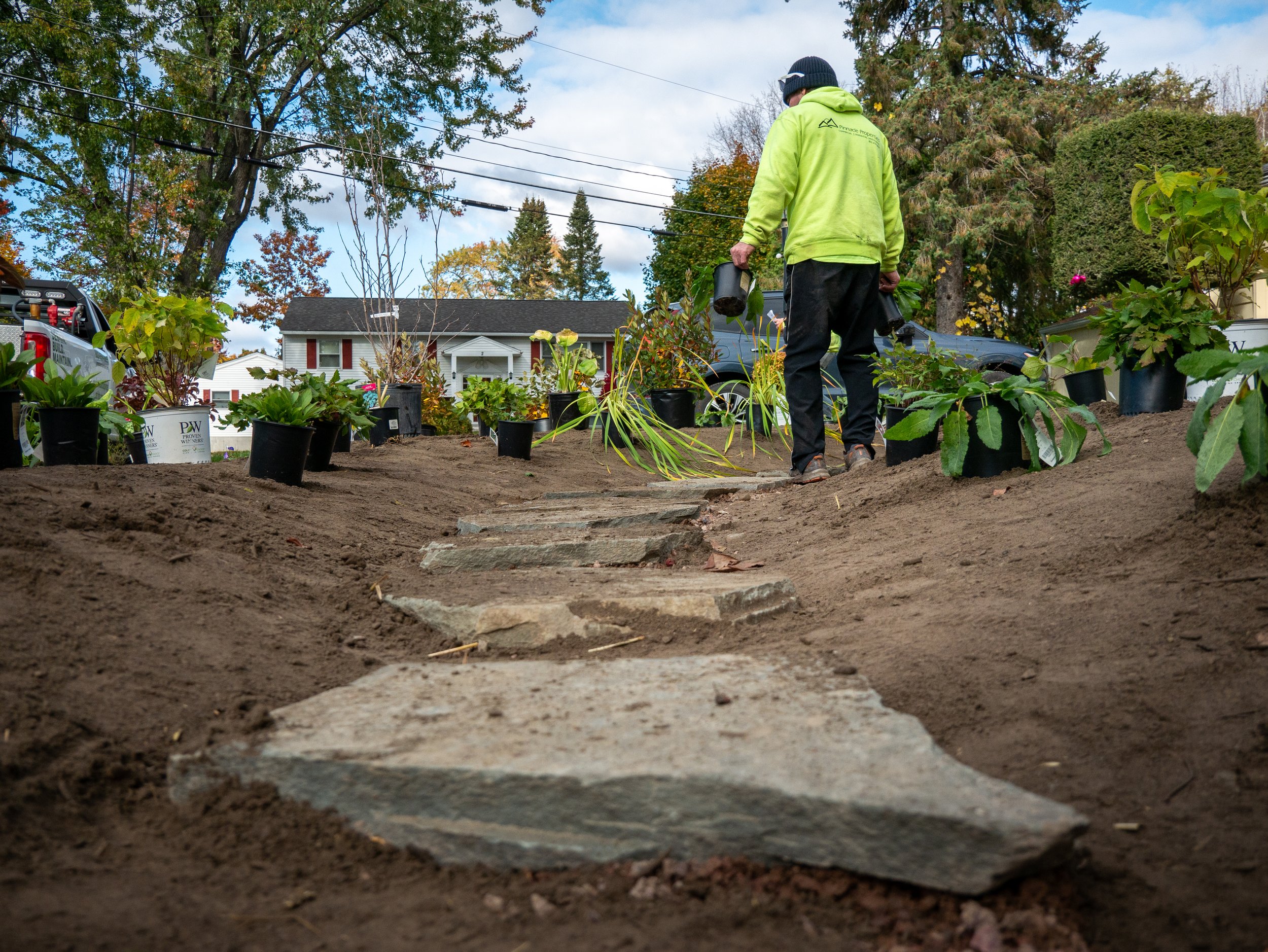
Walkways should lead somewhere. Patios should have a reason for being where they are. Planting areas can define spaces, create privacy, or frame views rather than simply filling empty portions of the yard.
When every part of the landscape has a purpose, the property becomes easier and more enjoyable to use.
4. Materials Are Chosen as a Group
A custom landscape doesn't necessarily require expensive or unusual materials. What matters more is how those materials work together.
Stone, pavers, walls, steps, edging, and other hardscape elements should have some visual relationship. That might come through color, texture, shape, or repetition.
Using too many unrelated materials can make a landscape feel busy. Using the same material everywhere can have the opposite effect and leave the property feeling flat.
A thoughtful design finds the middle ground.
For example, a particular stone might be used for a retaining wall and echoed in portions of a walkway. A complementary paver could then define the patio without making the entire property look identical.
These connections are subtle, but they help the landscape read as one complete design.
5. Planting Is Planned for the Future
A planting bed can look very different five years after installation than it does on the day it's planted.
That makes mature size an important part of custom landscape design. Trees, shrubs, perennials, and ornamental grasses need enough room to develop without eventually crowding walkways, windows, patios, or one another.
Plant selection also needs to account for the conditions of the site. Some areas may receive full afternoon sun, while others remain shaded for much of the day. Soil moisture can vary across the same property, particularly around slopes and low areas.
A custom planting plan works with those differences.
It also considers seasonal interest. Vermont's landscape changes dramatically throughout the year, so a well-planned planting design can provide different colors, textures, and forms as the seasons change rather than relying on one short period of peak interest.
6. The Design Accounts for the Parts You Don't See
Some of the most important landscape decisions are buried beneath the finished project.
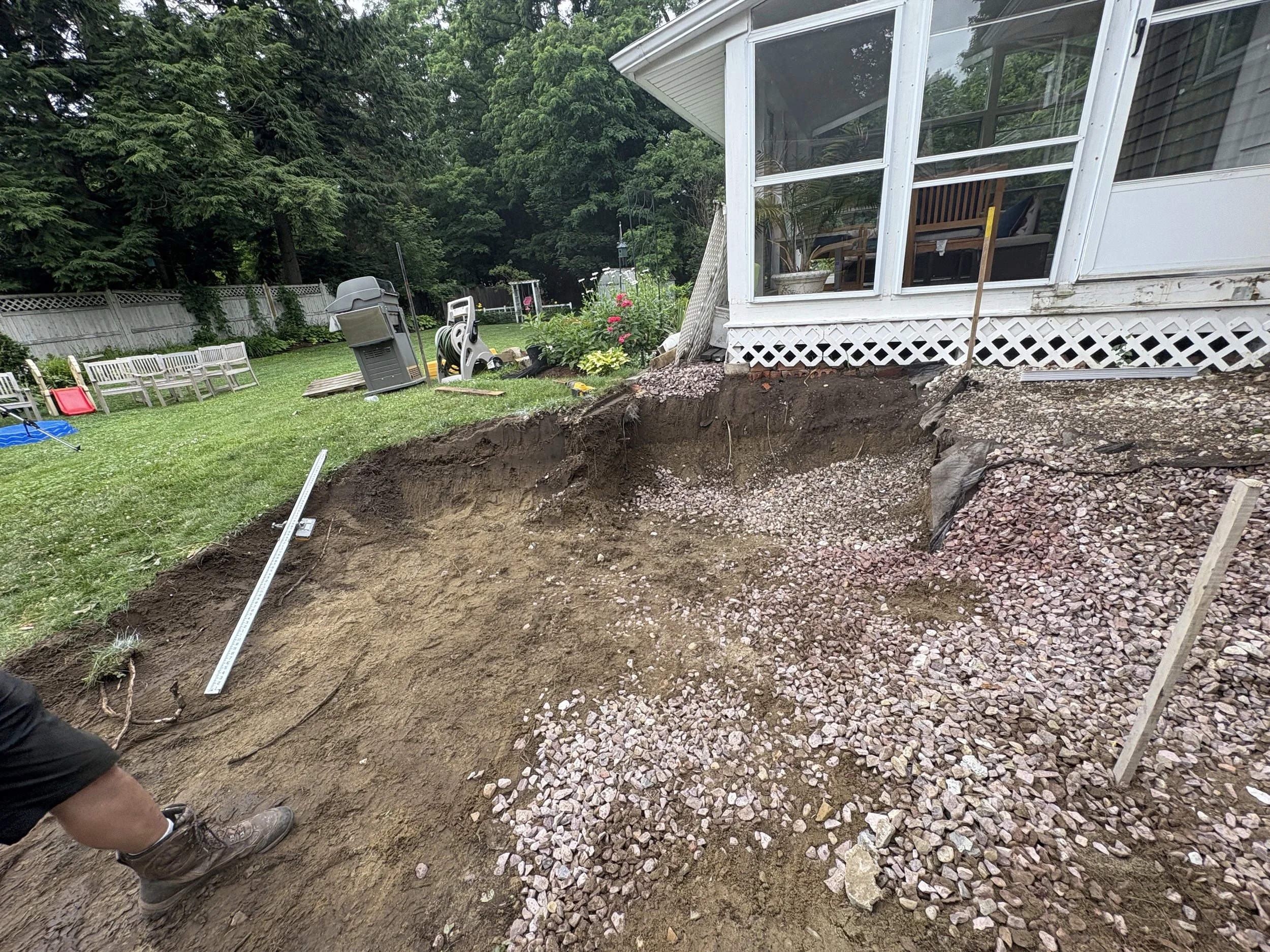
Drainage, grading, soil preparation, and proper base construction aren't features homeowners typically notice when looking at a finished patio or walkway. They are still critical to how that project performs.
This is especially important in Vermont, where freeze-thaw cycles, snow, spring runoff, and heavy seasonal precipitation can put considerable stress on outdoor spaces.
A custom landscape design considers those conditions before installation begins. Water needs to move where it's supposed to. Hardscape areas need an appropriate foundation. Changes in elevation need to be managed properly.
When these details are handled well, the finished landscape simply works.
7. The Design Leaves Room for the Future
Not every homeowner is going to complete their entire landscape in one season.
A family might start with a patio and walkway, then add planting beds or a retaining wall later. Another homeowner may want to address the front yard first and tackle the backyard in a future phase.
That doesn't mean the final landscape has to feel pieced together.
A comprehensive design can establish the overall direction from the beginning, even when construction happens in stages. Future additions can be considered before the first phase is installed, making it easier to maintain consistent materials, circulation, grading, and planting throughout the property.
This approach also gives homeowners more flexibility. They can invest in the areas that matter most right now without losing sight of what they may want to do later.
Custom Doesn't Have to Mean Complicated
There's a tendency to think that a custom landscape needs to be elaborate.
It doesn't.
Sometimes the most successful designs are relatively simple. A well-positioned patio, a carefully designed walkway, a few well-placed planting beds, and a retaining wall that solves a grading issue can completely change how a property feels.
The difference comes from the thought behind those decisions.
A custom landscape responds to the home, the land, the climate, and the people who will use it. It takes into consideration what works today and what will still make sense years from now.
That's very different from selecting a handful of landscape features and finding places to put them.
A Landscape Designed Around Your Property
At Pinnacle Properties, landscape design and installation are approached as one connected process. The goal is to understand the property and the homeowner's priorities before determining how the different pieces should come together.
For some projects, that means creating an outdoor living area with a patio, walkways, planting, and gathering spaces. For others, the starting point may be a steep grade, drainage issue, or underused portion of the property that needs a new purpose.
The finished landscape should feel like it belongs there.
That's ultimately what makes a landscape feel custom. It's not necessarily the number of features or the size of the investment. It's the fact that the design was developed around the property rather than selected from a template.
If you're considering a landscape project in Vermont, Pinnacle Properties can help you explore what's possible for your property.

Frequently Asked Questions
What makes a landscape design truly custom?
A custom landscape design is developed around the property's existing conditions, the home's architecture, and the homeowner's goals. The layout, materials, plants, grading, and outdoor spaces are selected to work together rather than following a standard template.
How does a landscape designer work with the existing property?
A landscape designer considers factors such as elevation, drainage, sun exposure, existing trees and vegetation, views, access points, and the home's location. These conditions help determine where different landscape features will work best.
Does a custom landscape design cost more than a standard landscape?
The cost of a landscape project depends on factors such as its size, materials, site conditions, features, and scope. Custom design doesn't automatically mean a project needs to be elaborate or use expensive materials. Thoughtful planning can also help homeowners prioritize improvements and avoid costly changes later.
Why are material choices important in landscape design?
Materials influence how different parts of the landscape relate to one another. Choosing complementary colors, textures, and styles for patios, walkways, retaining walls, and other hardscape features can make the finished property feel more cohesive.
How does landscape design account for Vermont's climate?
A Vermont landscape needs to account for seasonal weather, freeze-thaw cycles, snow, spring runoff, drainage, and site conditions. These factors can influence grading, drainage, material selection, plant choices, and construction methods.
Can a custom landscape project be completed in phases?
Yes. A comprehensive design can provide a long-term plan even when construction is completed over multiple seasons. This allows homeowners to prioritize certain areas while making sure future improvements fit the overall design.
What should I consider before starting a custom landscape project?
Start by thinking about how you want to use the property, which areas aren't working well, and what you'd like to change. It is also helpful to consider your long-term plans, desired maintenance level, and whether you expect to complete the project all at once or in phases.