Backyard Master Plan: How to Phase a Landscape Project Over Time
A great outdoor space rarely happens by accident. The most functional and visually cohesive landscapes are typically the result of thoughtful long-term planning—not a series of disconnected projects completed over time.
For many Vermont homeowners, completing a full landscape transformation all at once may not be practical. That’s where a backyard master plan becomes incredibly valuable.
A landscape master plan creates a roadmap for how your property can evolve over time while ensuring each phase works together seamlessly. Whether you’re starting with a patio this year or planning a complete outdoor living space over several seasons, a phased approach allows you to invest strategically without sacrificing the overall vision.
Here’s how a phased landscape project works—and why planning ahead can save time, money, and frustration in the long run.
What Is a Backyard Master Plan?
A backyard master plan is a comprehensive design strategy for your outdoor space. Instead of treating each project separately, a master plan looks at the property as a whole and creates a long-term vision for how every feature will connect.
This may include:
Patios
Walkways
Retaining walls
Outdoor seating areas
Drainage improvements
Grading and layout changes
Entryways and transitions
Future outdoor living features
Even if the work is completed in stages, the overall design remains cohesive and intentional.
Why Phasing a Landscape Project Makes Sense
Phasing allows homeowners to spread projects over time while still working toward a unified end result.
There are several reasons homeowners choose this approach:
Budget Flexibility
Large outdoor projects are investments. Breaking work into phases allows homeowners to prioritize improvements while managing costs over time.
Seasonal Timing
Some installations are best completed during certain times of year. A phased plan allows projects to progress strategically with Vermont’s construction season.
Long-Term Vision
Instead of reacting to immediate issues, a master plan ensures future additions complement the original design and improve overall functionality.
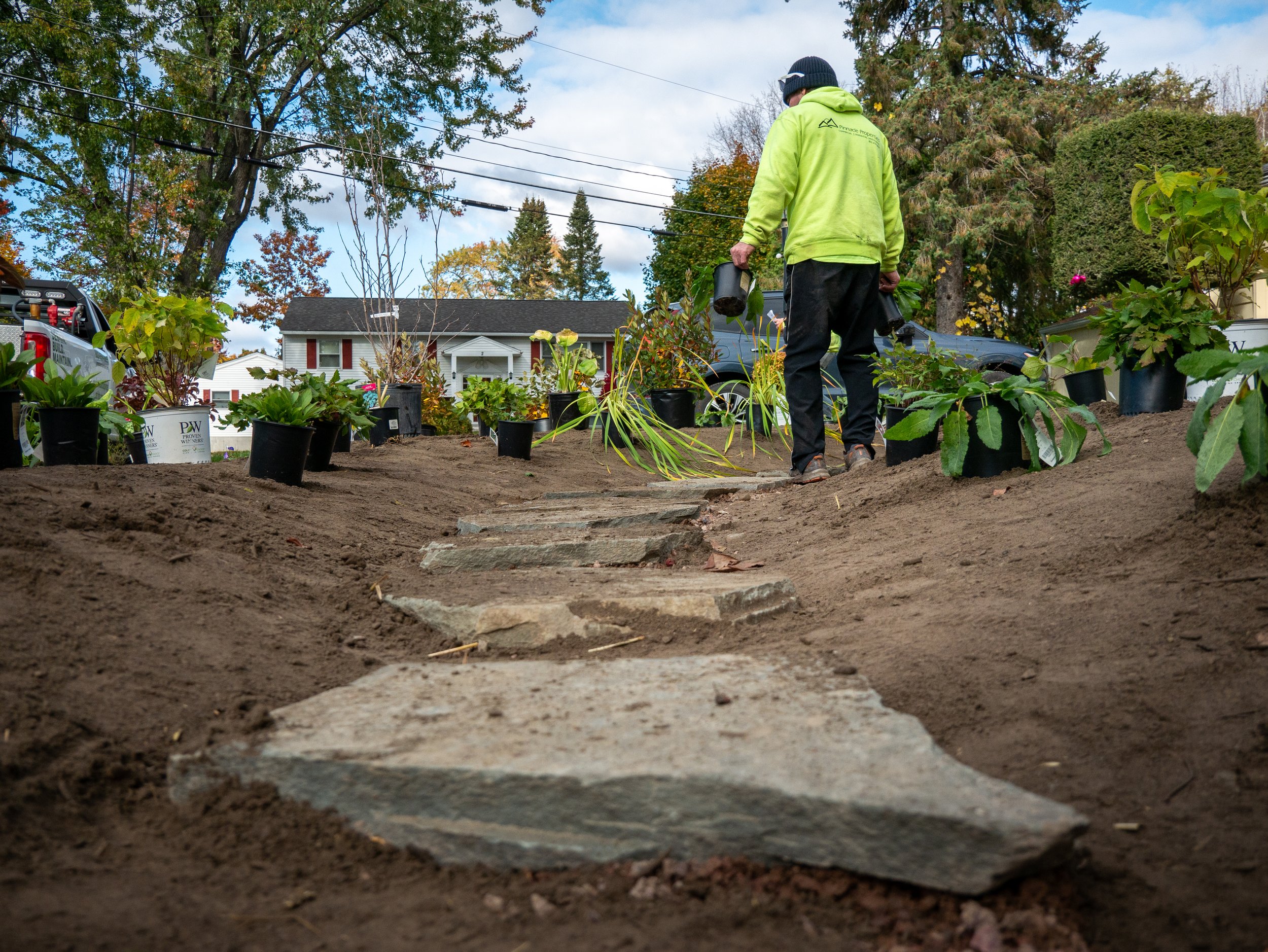
The Problem with Piecemeal Landscaping
Without a long-term plan, landscape projects often become disconnected over time.
Common issues include:
Materials that don’t match
Poor flow between spaces
Repeated excavation or rework
Drainage issues created by later additions
Wasted space or inefficient layouts
What starts as a simple patio project can eventually feel disjointed if future improvements were never considered from the beginning.
A master plan helps avoid these costly mistakes.
Phase One: Focus on the Foundation
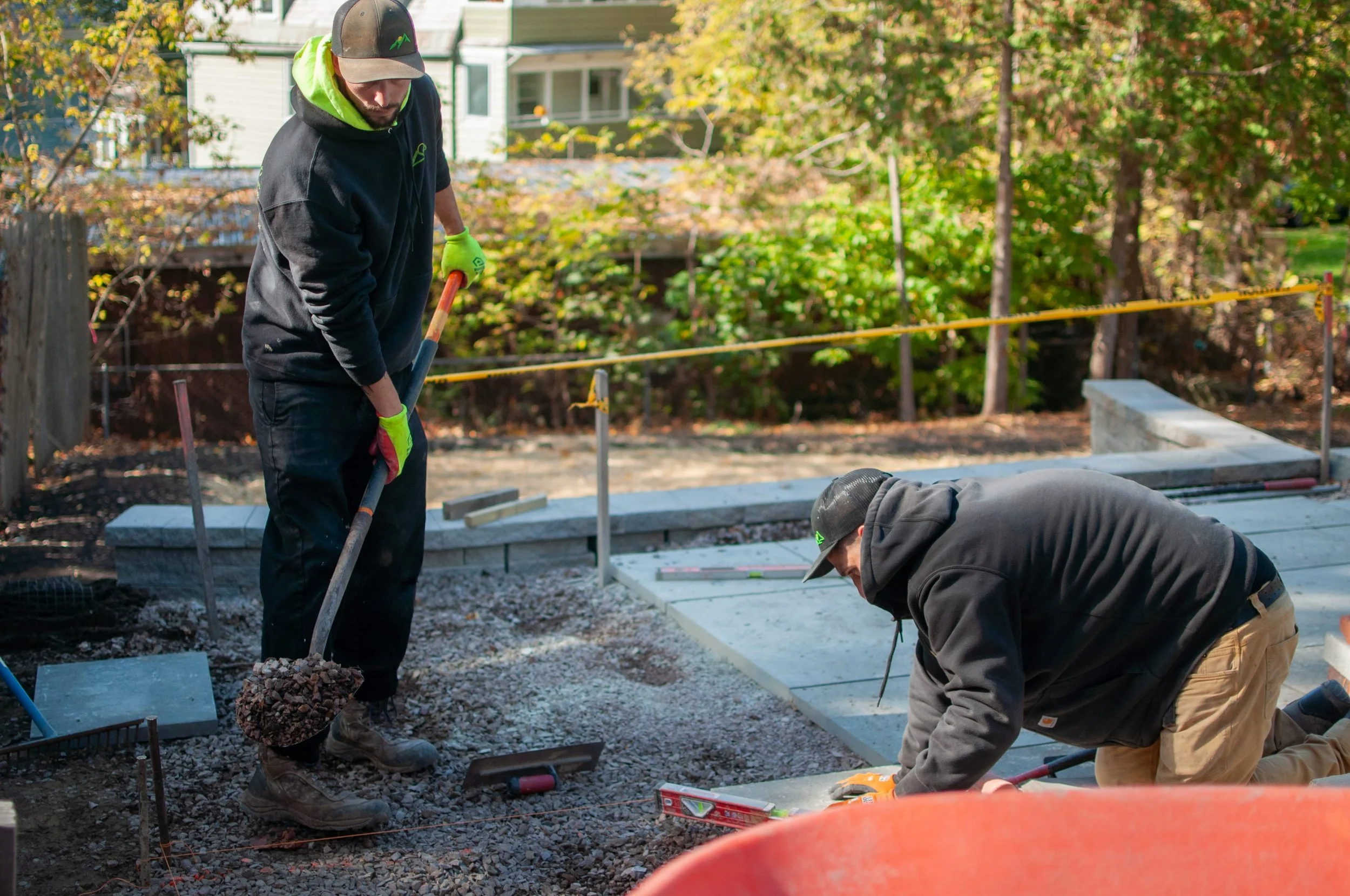
The first phase of a landscape project often focuses on structural and foundational improvements.
This may include:
Grading and drainage corrections
Retaining walls
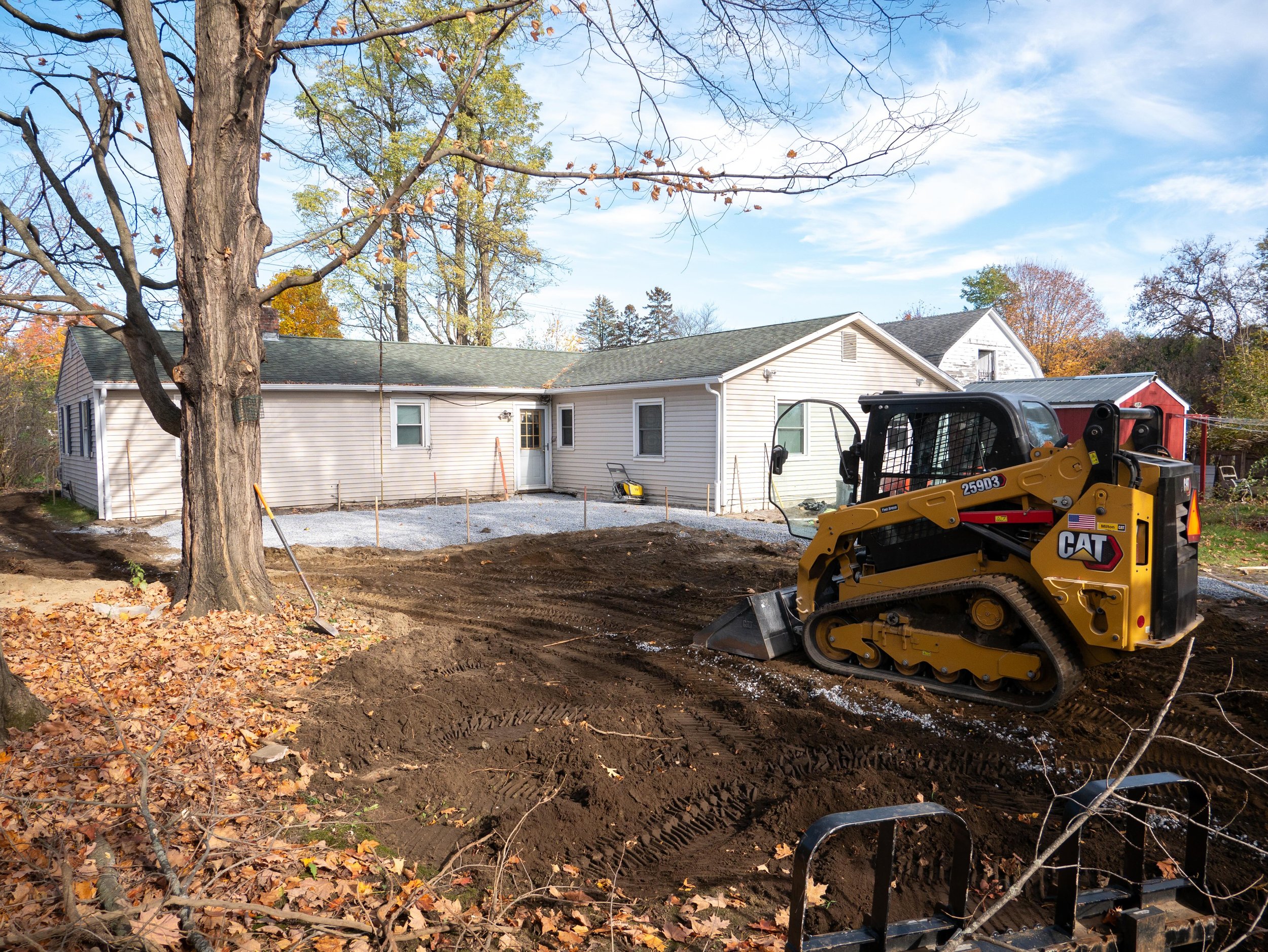
Excavation and site preparation
Walkways and access points
Primary patio installation
Starting with foundational elements ensures future additions have the support and infrastructure they need.
In Vermont, this is especially important because drainage and freeze–thaw conditions can impact long-term durability.
Phase Two: Build Functional Outdoor Living Areas
Once the structural framework is in place, the next phase often focuses on how the space will be used.
This could include:
Expanded patio areas
Seating spaces
Outdoor gathering areas
Fire feature integration
Connections between different zones of the property
At this stage, homeowners begin to see how the landscape supports daily use and outdoor living.
Phase Three: Refine and Enhance the Space
The final phase often includes finishing touches and enhancements that elevate the overall experience of the property.
Examples may include:
Decorative landscape features
Additional hardscape details
Expanded entertainment areas
Property transitions and visual enhancements
Because these additions were considered during the original planning process, they integrate naturally into the completed landscape.
Why Starting with a Master Plan Saves Money
Some homeowners assume planning everything upfront is unnecessary if they’re only completing part of the project initially. In reality, long-term planning often reduces future costs.
A master plan helps prevent:
Redundant labor and excavation
Material mismatches
Rebuilding or modifying completed work
Drainage conflicts between phases
It also ensures infrastructure is installed correctly the first time, reducing future disruption to completed spaces.
Planning for Vermont’s Climate
Landscape projects in Vermont require careful consideration of weather, drainage, and seasonal movement.
A phased design-build strategy allows homeowners to:
Prioritize drainage and grading early
Choose materials suited for freeze–thaw cycles
Build durable hardscapes in stages
Prepare the property for future additions
This results in a landscape that not only looks cohesive but also performs reliably year after year.
A Cohesive Design Creates Better Outdoor Flow
One of the biggest advantages of a master plan is how it improves movement and usability throughout the property.
Instead of isolated features, the landscape becomes a connected experience.
Thoughtful planning considers:
Natural traffic patterns
Relationships between spaces
Views and focal points
Functional transitions between areas
The result is a property that feels organized, intentional, and easier to enjoy.
When Should You Start Planning?
The best time to begin planning is often before construction starts—even if you only plan to complete one phase initially.
Early planning allows for:
Better design decisions
Smarter budgeting
More efficient scheduling
Material coordination
Future flexibility
It also helps ensure every investment contributes to the larger vision for the property.
Why Design-Build Matters for Long-Term Projects
Phased projects work best when the same team understands both the design vision and installation requirements.
A professional design-build approach ensures:
Cohesive planning from the beginning
Accurate site evaluation
Proper grading and drainage integration
Consistency across project phases
Efficient execution over time
This helps maintain continuity throughout the life of the project and minimizes surprises during future phases.
Your Backyard Doesn’t Have to Be Completed All at Once
Creating a beautiful and functional outdoor space is a process. A phased landscape approach allows homeowners to move forward strategically while building toward a long-term vision.
Whether you’re starting with a patio, retaining wall, or a full outdoor redesign, a backyard master plan helps ensure every phase contributes to a cohesive and lasting result.
With thoughtful planning, your outdoor space can continue evolving over time—without feeling pieced together along the way.
Frequently Asked Questions About Phased Landscape Projects
What is a landscape master plan?
A landscape master plan is a long-term design strategy that maps out how outdoor spaces and features will be developed over time.
Can I complete a landscape project in phases?
Yes. Many homeowners phase projects over several seasons to better manage budget, timing, and priorities while maintaining a cohesive design.
Why is planning important before starting a patio or hardscape project?
Planning ahead helps avoid costly rework, drainage problems, and design inconsistencies as future phases are added.
What should be completed first in a landscape project?
Foundational elements such as grading, drainage, retaining walls, and primary hardscapes are often completed first to support future additions.
Does a phased landscape project save money?
In many cases, yes. A master plan helps reduce redundant work, material conflicts, and future modifications by planning the entire property upfront.