Planning a Landscape Installation for Next Spring? Why September Is the Time to Start
When September arrives in Vermont, most homeowners are thinking about fall cleanup, cooler evenings, and getting their property ready for winter. Spring landscape projects can feel like something that can wait until next year.
But if you're hoping to build a patio, redesign your backyard, install new walkways, address retaining walls, or complete another major landscape project next spring, September is actually one of the best times to start planning.
A successful landscape installation involves much more than choosing materials and setting a construction date. There are site conditions to evaluate, design decisions to make, materials to select, and project details to work through before installation begins.
Starting in the fall gives that process room to happen properly. More importantly, it puts you in a much better position to move forward when Vermont's next landscape installation season arrives.
Spring Landscape Projects Begin Long Before Construction
It's easy to think of a landscape project in terms of the visible construction phase. Excavation starts, materials arrive, patios and walls take shape, and new planting areas begin to transform the property.
Long before any of that happens, however, there needs to be a plan.
A professional landscape design considers how the property currently functions and what the homeowner wants to change. That can include evaluating drainage, grading, slopes, existing hardscapes, traffic patterns, planting areas, views, privacy, and the relationship between the home and the surrounding landscape.
For a simple improvement, planning may be relatively straightforward. For a larger design-build project involving multiple features, there may be several decisions that need to be made before construction can begin.
Starting those conversations in September means those decisions don't have to be rushed in the spring.
Fall Gives You a Better Look at Your Property
September is also a useful time to evaluate what worked—and what didn't—during the summer.
After spending a full season outside, you probably have a clearer idea of how your property functions. Maybe the patio feels too small when friends come over. Perhaps there's no comfortable path between the driveway and backyard. You may have noticed water collecting after summer storms, a slope that's difficult to maintain, or an area that could use more privacy.
These observations are valuable when developing a landscape plan.
Instead of trying to remember those problems months later, you can evaluate them while you're still actively using the property. That makes it easier to identify priorities and explain what you want the new landscape to accomplish.
Take note of the spaces you used frequently as well as the ones you didn't. Sometimes an underused part of the yard isn't inherently unusable—it simply needs a better layout or purpose.
Good Landscape Design Takes Time
One of the biggest advantages of planning early is having enough time to develop the design thoughtfully.
For larger landscape projects, the first idea isn't always the final one. The design process may involve exploring the placement of patios, walkways, retaining walls, planting areas, steps, gathering spaces, and other features before settling on the right configuration.
Homeowners also need time to review the plan and consider how it fits their priorities.
Would a larger patio be more useful than an additional planting area? Should the fire pit be connected to the main patio or positioned farther into the yard? Could a retaining wall solve a grade problem while creating additional usable space?
Those decisions are easier to make when you're not trying to finalize everything immediately before construction.
At Pinnacle Properties, the design process can include a scaled plan showing the proposed landscape elements, material and plant selections, proposed structures or site amenities, and an estimate for installation. Starting in September gives that process time to develop before the spring season.
You Have More Time to Think About Materials
Hardscape materials have a major influence on how a finished landscape looks and performs.
Patios, walkways, steps, walls, and other built elements should complement the home while also standing up to Vermont's weather. Color, texture, scale, maintenance, drainage, and freeze-thaw conditions can all affect material decisions.
When planning begins early, homeowners have more time to consider those options instead of making selections under pressure.
The same is true for plants. A planting plan isn't simply about choosing what looks attractive at the garden center. Sunlight, soil, drainage, mature size, seasonal interest, maintenance needs, and the relationship between plants all affect how a landscape performs over time.
Giving these choices more attention during the planning stage can make a noticeable difference in the finished project.
Early Planning Can Reveal Problems Before Construction
Some of the most important parts of a landscape installation are the things you won't notice once the project is finished.
Drainage and grading are good examples.
If water collects near the house, flows across a future patio area, or causes erosion on a slope, those conditions should be understood before construction begins. Building the visible portion of a landscape without addressing the underlying site can create problems later.
The same applies to retaining walls, changes in elevation, existing structures, access for equipment, and connections between new and existing hardscapes.
Beginning the process in September provides time to identify those issues and incorporate appropriate solutions into the overall design rather than discovering them halfway through construction.
Larger Projects May Need to Be Phased
Not every landscape transformation has to happen at once.
If your long-term plan includes a patio, retaining walls, walkways, planting beds, a fire pit, and other outdoor living features, it may make sense to complete the project in stages.
The important part is determining those stages before the first one begins.
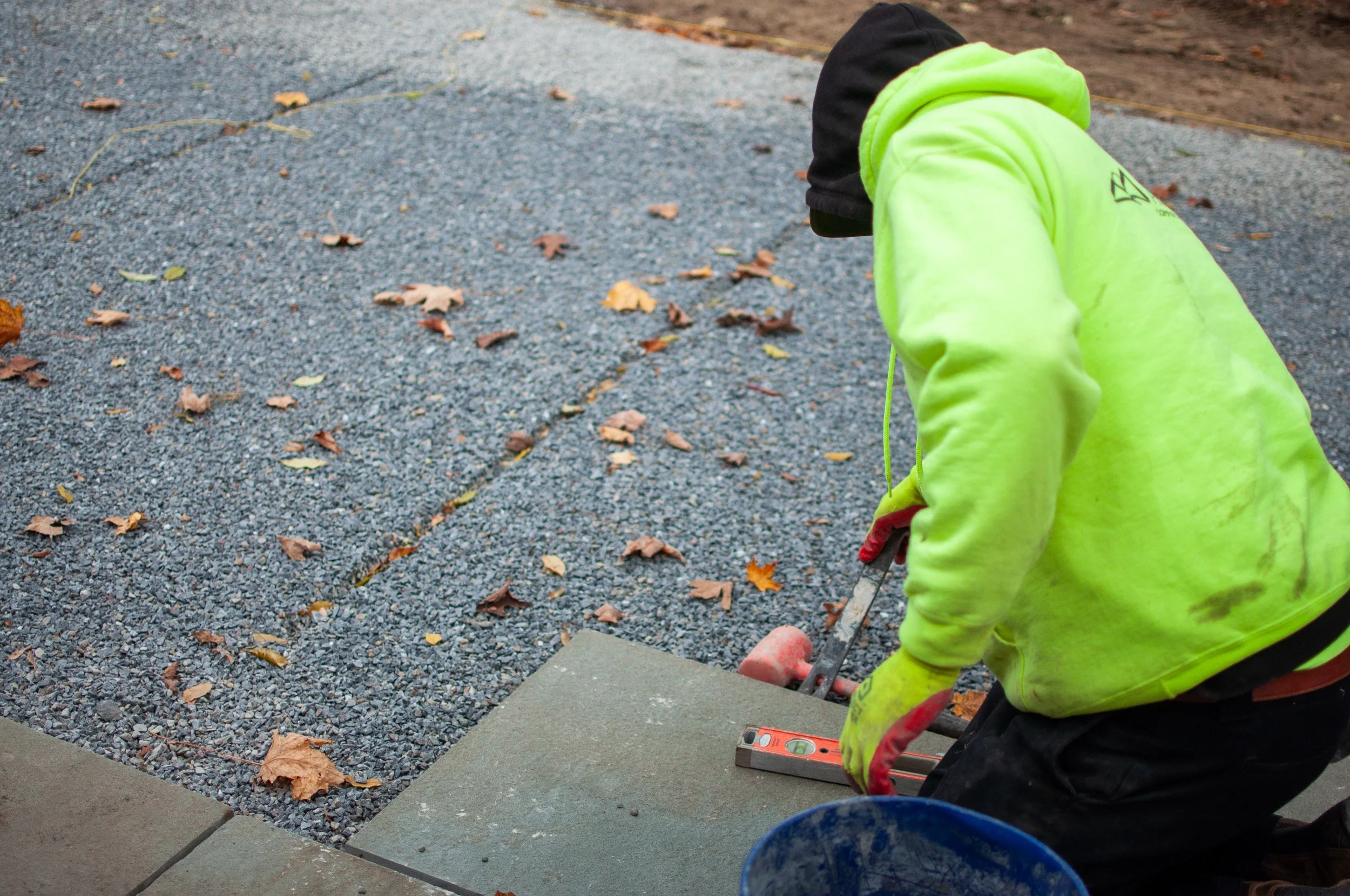
For example, grading, drainage, excavation, walls, and major hardscape areas generally need to be considered before smaller finishing elements. Building one feature without considering what will eventually surround it can make later phases more difficult or require completed work to be changed.
A comprehensive plan for you backyard allows the landscape to develop over time while still feeling like one cohesive project.
September Gives You Time to Establish a Realistic Scope
Landscape ideas tend to grow.
A homeowner may begin thinking about replacing a patio and then realize the walkway should be updated at the same time. Once the layout changes, an existing retaining wall may need attention. New planting beds or outdoor lighting might also become part of the conversation.
That's normal.
Starting early gives you time to separate the features that are essential from the ones that would simply be nice to include. You can then develop a project scope that makes sense for the property and your priorities.
If the project needs to be phased, those decisions can also be made before construction begins rather than during it.
Planning Ahead Helps With Spring Scheduling
Spring is naturally a popular time for landscape construction in Vermont. Once winter begins to wind down, homeowners start thinking seriously about outdoor projects again.
That's exactly why waiting until spring to begin the design process can be limiting.
A project that is already planned is much closer to being ready for construction than one that still needs site evaluation, design development, material selections, estimates, and approvals.
Starting in September doesn't mean construction begins immediately. It simply means the planning process can move forward while there is plenty of time to make thoughtful decisions.
If your goal is a spring installation, having those conversations months ahead can put the project in a much better position when the season arrives.
Use Winter as Planning Time, Not Waiting Time
Once the property is covered in snow, it may seem like landscape planning has to stop. In reality, winter can be useful for refining a project that's already underway.
If the site has been evaluated and the initial goals have been established during the fall, the colder months can be used to review plans, consider materials, refine details, and prepare for the spring construction season.
That is very different from starting from scratch in March or April.
By beginning in September, you can use the off-season productively instead of waiting for warm weather before making the first call.
What Should You Do in September?
You don't need to have every detail figured out before talking with a landscape professional. A general sense of what isn't working and what you'd like to improve is enough to start the conversation.
Spend some time walking around the property and pay attention to how different areas function. Think about where you naturally gather, which spaces feel disconnected, where drainage or grading causes problems, and which features you wish the property had.
It can also help to collect a few examples of outdoor spaces you like. They don't need to match your property exactly. Photos can simply help communicate preferences for materials, layouts, planting styles, or the overall atmosphere you want to create.
From there, those ideas can be evaluated against the actual conditions of your property.
Frequently Asked Questions About Planning a Spring Landscape Installation
Is September too early to plan a spring landscape project?
No. For larger landscape installations, starting in September provides time for site evaluation, design development, material decisions, estimating, and scheduling before the spring construction season.
What types of projects should be planned in advance?
Patios, walkways, retaining walls, outdoor living spaces, major planting projects, grading improvements, and projects involving several landscape features can all benefit from early planning.
Do I need to know exactly what I want before contacting a landscape designer?
No. Knowing the problems you want to solve and how you'd like to use the property is a good starting point. The design process can help determine the specific features and layout.
Can landscape design continue during the winter?
Yes. Once the property has been evaluated and project goals are established, winter can be used to refine plans, review materials, make selections, and prepare for installation.
Can a large landscape project be completed in phases?
Yes. A larger project can often be divided into phases. Developing the overall plan first helps ensure that early phases don't interfere with future construction.
Why not wait until spring to start planning?
Waiting until spring means the design, estimating, material selection, and scheduling process begins at the same time many homeowners are trying to start construction. Planning earlier provides more time to work through those steps before installation season.
Start Planning Next Spring's Landscape This Fall
A great spring landscape project doesn't have to begin with an excavator arriving in the driveway. It can begin months earlier with a walk around the property and a conversation about what could work better.
September offers an opportunity to evaluate your landscape while this year's experience is still fresh, identify the improvements that would make the biggest difference, and develop a thoughtful plan without rushing.
For homeowners in Chittenden County considering a patio, retaining wall, walkway, outdoor living space, planting plan, or larger property transformation next spring, Pinnacle Properties can help take the project from the initial idea through design and installation.